
Metal Mastery: Anodising vs. PVD Coating for Piercing Jewelry
Metal Mastery: Anodising vs. PVD Coating for Piercing Jewelry
Jewellery quality plays a huge role in the success of a fresh piercing. Besides choosing from a short list of proper jewellery materials, you must also ensure that it has the right texture and finish. Scratches in the jewellery surface can harbour bacteria and debris that are harmful to a fresh piercing, and improper surfacing could be incompatible with the skin. As a piercer, it’s your responsibility to ensure your clients’ safety, including the right choice in metal surface finishing. To help you make informed decisions, we’ve put together this handy guide to various types of finishing and the difference between anodising and PVD coating. Let’s dive in!
Overview of Metal Surface Finishing in Piercing Jewellery
Metal surface finishing is the practice of altering a metal’s surface so that it’s suitable for different uses. In piercing jewellery, this is an essential process for a few reasons.
- Durability: Depending on the type of finish, the jewellery’s durability can be improved. For example, electroplating can prevent tarnish, improve corrosion resistance, and protect the metals underneath.
- Cleanliness: A polished finish will ensure that the jewellery is smooth and free from scratches. Although they may seem like a small thing, scratches on the jewellery surface can carry bacteria that are harmful to a healing piercing.
- Aesthetics: Different types of metal finishing can achieve new and unique looks that your customers will love. For example, the anodisation process creates beautiful and bright colours in titanium and surgical steel jewellery.
When choosing metal surface finishing styles, consider whether the jewellery will be worn in a fresh or healed piercing and how often it will be worn. Although some finishing styles offer a gorgeous look, some are unsuitable for healing piercings, and others may fade over time.
Types of Metal Surface Finishing for Piercing Jewellery
Depending on aesthetic preferences, there are several different types of metal surface finishing. It’s important to note that in fresh piercings, the parts of the jewellery that contact the body must be polished, although the decorations can have matte or satin finishes. Even small scratches in the jewellery can carry bacteria.
These finishes are essential for jewellery safety, which is especially important in fresh piercings.
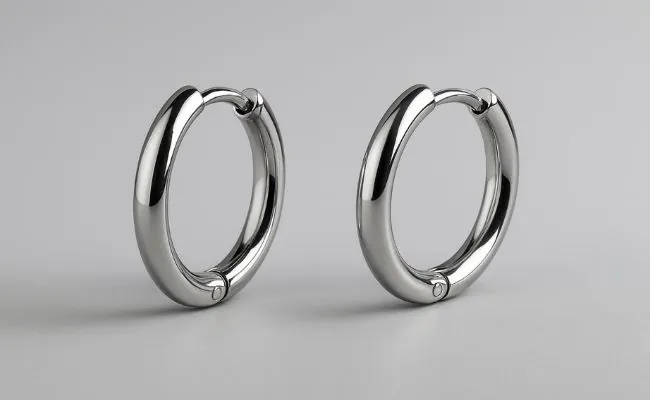
Polished
This finish removes imperfections and improves corrosion resistance by creating a smooth, reflective finish using a machine.
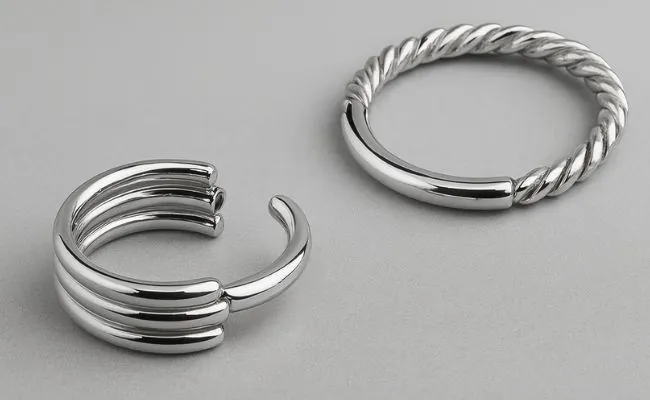
Electropolishing
This is an electrochemical process that removes a thin layer of metal from the surface of the jewellery to reveal a shiny, smooth surface beneath.
The key difference between machine polishing and electropolishing is that the former uses a machine to grind imperfections away while the latter uses chemicals to reduce the roughness of the surface.
Passivation
This process uses acid to remove free iron from the surface of surgical steel and create an oxide layer to enhance the corrosion resistance of stainless steel without altering its appearance. Anodising is a way of passivising metal parts.
All of the jewellery offered on our site is either hand-polished or machine-polished. Since both electropolishing and passivation use chemicals in the polishing process, they’re not as suitable for piercings, especially fresh ones. Aesthetic finishes enhance the appearance of the jewellery.
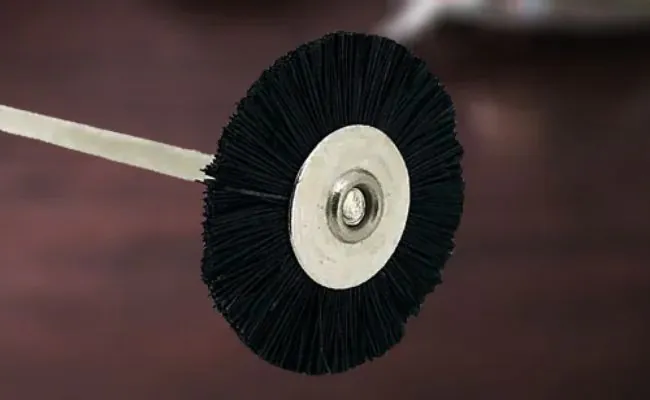
Brushed
Brushing creates a unidirectional satin finish that hides scratches and scrapes, improving its longevity and adding a contemporary feel.
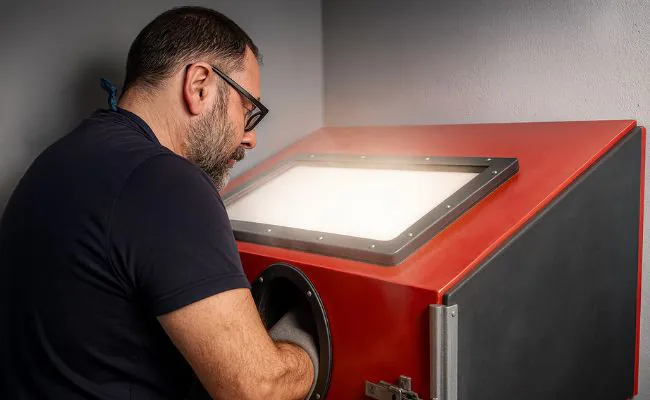
Sanded
As the name implies, a sanded finish is achieved when the metal is sanded for a matte appearance.
While a brushed finish creates unidirectional lines along the metal, a sanded finish creates a uniform look.
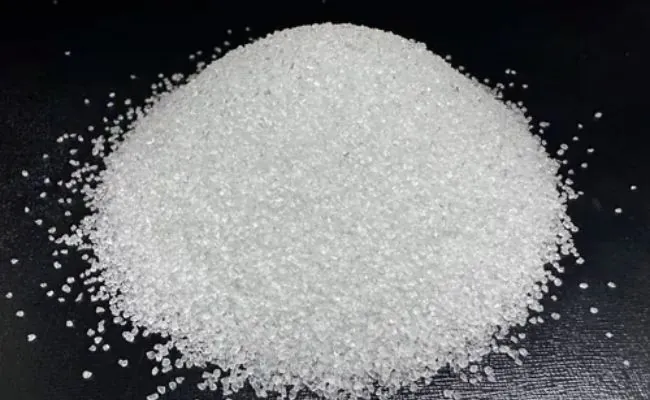
Bead blasted
Achieved by blasting the metal with glass or steel beads, this finish has a similar appearance to sanding. It offers a clean and smooth look that adds a touch of sophistication to the jewellery appearance.
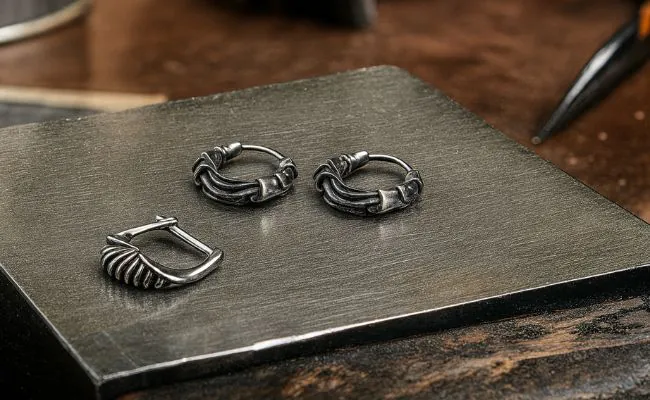
Etching
This is a more decorative finish style that adds textured patterns or intricate designs onto the metal. It can create a clean and appealing aesthetic in body jewellery that has enough surface area to display the designs well.
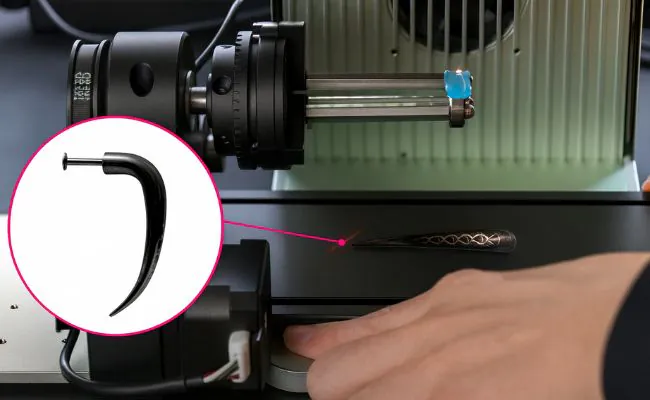
Laser engraving
Similar to etching, this surface finish uses lasers to add decorative patterns to the jewellery.
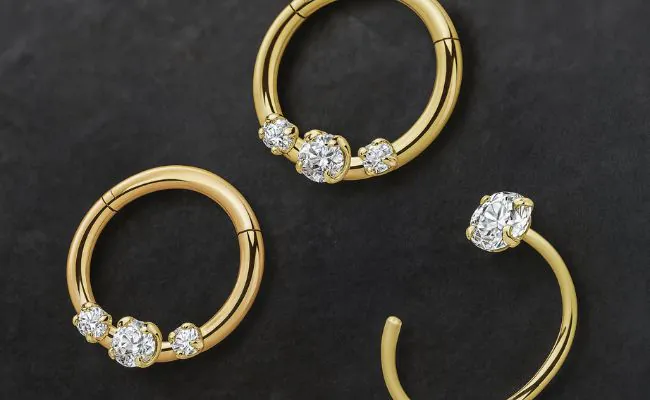
Electroplating
Rather than altering the surface of the metal, electroplating covers the jewellery with a thin layer of another metal using electrodeposition. This is usually done for cost-effective aesthetics—for example, gold-plating surgical steel to enjoy the beauty of gold without the price tag—or tarnish prevention.
Defining Anodised and PVD-Coated Jewellery
Two of the most common ways to achieve colourful and unique body jewellery pieces are through anodising and PVD coating. Both processes create a beautiful colour on the body jewellery piece, but they use different methods to do so.
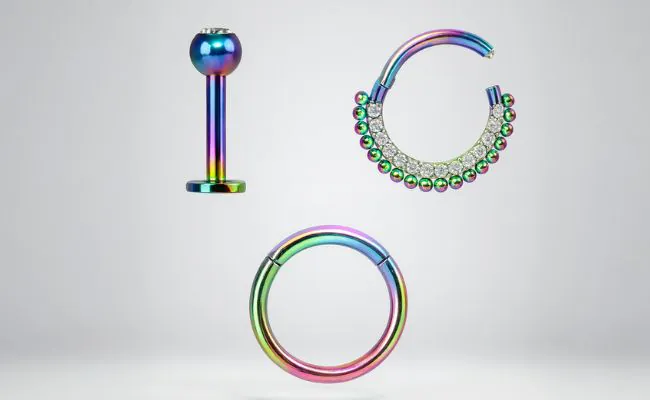
Anodised body jewellery
Anodising is an electrolytic process that thickens the natural oxide layer. This enhances corrosion and wear resistance and changes the metal colour, turning it into bright yellows, purples, multi-colours, and more. Because this process improves resistance to wear and tear, it keeps the jewellery looking glossy and colourful for quite some time.
Anodised jewellery can also be worn in fresh piercings since the colour change is achieved through an electrochemical process rather than plating.
Because it’s difficult to anodise steel, all of the anodised jewellery that you’ll find on our site is titanium.
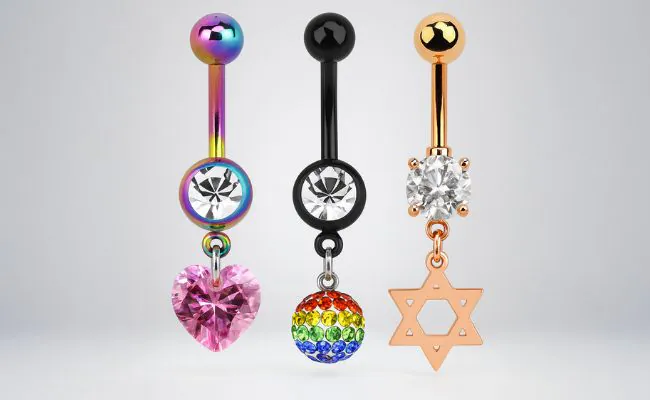
PVD-coated body jewellery
PVD (Physical Vapour Deposition) coating places a thin, high-tech film over the metal base without changing the weight or dimensions of the jewellery piece. It’s done by applying layers of vaporised metal condensation, which prevents corrosion and wear and improves the durability of the jewellery.
PVD coated jewellery comes in a wider range of colour choices and finishes than anodised jewellery, including matte or high-gloss finishes, but because it’s a coating, it should not be worn in fresh piercings.
What’s the Difference Between Anodising and PVD Coating?
Anodised jewellery and PVD-coated jewellery both have their place, depending on what you need. One of these is not better than the other; anodising penetrates the metal to change the jewellery, while PVD only coats the jewellery surface. Rather, they are two different processes that produce different body jewellery pieces. Let’s take a look at some of the biggest considerations.
- Fresh piercings: Anodised ASTM F-136 titanium is suitable for fresh piercings, while PVD coating is not, even if the metal coating is of a proper grade. This is because, with any plated jewellery, there’s a chance that the coating can chip off if the piece is damaged. This can be harmful to a healing piercing. It’s important to note that anodised jewellery is only suitable for fresh piercings if it’s not plated. If it has anodised plating, it cannot be worn in new piercings as plated jewellery is not safe to wear until the piercing has healed.
- Durability: Although both finishes improve the durability and corrosion resistance of the jewellery, the colour of anodised jewellery may change over time, depending on the wearer’s body chemistry and whether it sees a lot of friction. However, this can be fixed with an anodising machine. PVD coating, on the other hand, is often seen as more durable than anodising if done well. However, you need to make sure that you invest in high-value jewellery, like that offered on our site, as the quality of PVD coating can vary.
- Irritation and allergies: Because the anodising process does not change the jewellery material, it won’t cause irritation or an allergic reaction, even if the colour changes with frequent wear. PVD coating shouldn’t cause irritation as long as it uses hypoallergenic materials. The PVD-coated jewellery on our site has a surgical steel base coated with titanium, minimizing the risk of irritation or developing a metal allergy.
- Choice of colour: Although anodising offers a range of colours, they are limited. The anodised jewellery on our site, for example, is only offered in light blue, blue, purple, and green. It can also be difficult to create a consistent colour due to the nature of the anodising process. Meanwhile, PVD coating comes in a wider range of colours in a more consistent manner. Our PVD-coated jewellery comes in all sorts of colours, including black, purple, rose gold, green, and more.
- Cost: Anodising is typically more expensive than PVD coating.
It’s a good idea to have both anodised and PVD-coated jewellery available in your piercing studio. Anodised jewellery is great for fresh piercings that beg for a splash of colour, while the low cost and wide range of colours available in PVD-coated jewellery is ideal for healed piercings.
Why Quality Finishing Matters
Quality body jewellery should be a top concern of any piercing professional. Proper jewellery materials and design are imperative to safe healing, and even in healed piercings, improper jewellery could cause damage.
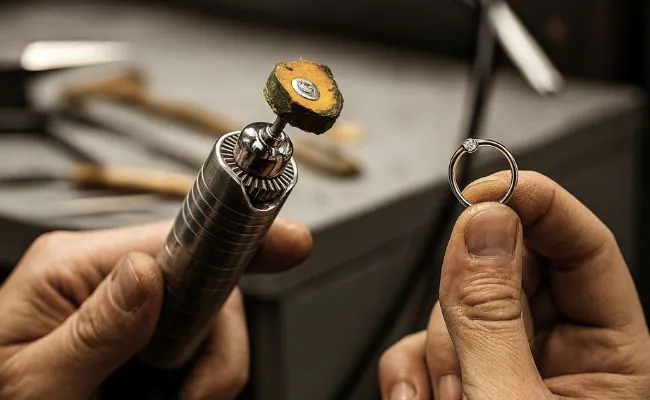
You need to ensure that the jewellery you offer to your customers not only looks good but keeps your clients safe.
Metal surface finishing is crucial for extending the lifespan of piercing jewellery and keeping it safe and beautiful for as long as possible.
Proper finishing eliminates debris-carrying scratches and dents, creates a more comfortable wear, and elevates the look of the jewellery, even if it’s cost-efficient.
In case you need more convincing, here are some of the top reasons why you should pay special attention to how your piercing jewellery is finished.
- Skin health and safety: Allergies can form after long exposure to allergens like nickel. A high-quality coating can protect the skin from trace amounts of nickel, like that found in surgical steel. However, you also need to be careful when it comes to skin sensitivity and metal plating. Some coating will fade over time, exposing the skin to the metals beneath. If these metals contain allergy-causing alloys, it could be a problem. On the other hand, anodised titanium enjoys the hypoallergenic properties of ASTM F-136 titanium with fun and unique colours. You should always ask your customers whether they have skin sensitivity issues and guide them toward the proper jewellery for their specific needs.
- A wide range of offerings: Different finishes create different aesthetics. If you have a wide range of customers, you must have the matching jewellery options. Stocking up on jewellery carrying various finishes will ensure that you’re stocked up on the perfect body jewellery for all sorts of styles.
- Durability: As we’ve mentioned above, different types of finishing are designed to improve the durability of body jewellery. However, the finish must be of high quality; if it’s not finished properly, it won’t have the intended durability. Make sure that you invest in high-quality jewellery pieces that enjoy top levels of quality control and carry materials certifications.
- Brand reputation: Jewellery choice is almost equal to proper piercing technique when it comes to client safety. By opting for the top quality jewellery finishes, you can feel secure knowing that your customers are set up for success with the best body jewellery available. Successful clients will recommend your services, and your brand reputation will remain intact.
Conclusion
As you stock your studio, you need to make sure that your jewellery is safe, aesthetic, and high quality. Choosing the right finish can ensure all of these considerations. By investing in both anodised and PVD-coated jewellery, you ensure that your clients can enjoy a wide range of jewellery choices that are suitable for either fresh or healed piercings. Check out our selection today!
Shop quality wholesale body jewellery
As a piercing studio, you need to trust your body jewellery wholesaler. You can do all of the research that you want, but the durability and quality of the jewellery finish comes down to your supplier; you have to trust that their jewellery adheres to your standards.
We care as much about your clients’ safety and satisfaction as you do. That’s why we carry some of the highest standards of quality control and only offer wholesale body jewellery that’s biocompatible and has a high-quality finish. Our selection includes top trends alongside the best quality body jewellery you can find anywhere. That’s why some of our loyal customers have enjoyed decades-long relationships with us; they know we offer jewellery and piercing tools that they can trust.
To build trust, we make ourselves available for any and all questions. To learn more about our finishing processes and see if our safety standards align with your studio, please feel free to contact us. In the meantime, browse our vast array of PVD-coated and anodised body jewellery options.
FAQ Section
What finish should I choose for fresh piercing jewellery?
The proper finish is an essential consideration for fresh piercings. Here are the top things to look for:
- Polished finish: The parts of the jewellery that touch the skin should be carefully polished and new. Do not use an old piece of jewellery, even if it’s been sterilised. It could have scratches and dents that may harbour bacteria.
- No coating: Fresh piercing should not wear jewellery that’s coated or plated. Even the most durable coating could wear down, and if the jewellery gets damaged, there’s a chance that the coating could flake off.
- Passivation: Jewellery for fresh piercings should always be passivated. This improves the biocompatibility, corrosion resistance, and durability of the jewellery piece.
Which finishes are best for those with sensitive skin?
Metal allergies may develop with prolonged exposure to allergens like nickel. Therefore, those who have sensitive skin should avoid metals that contain even trace amounts of nickel, such as surgical steel. They should also avoid plated finishes if the metal underneath contains allergens since plating may wear away with frequent use. Those who have sensitive skin can still enjoy colourful finishes with anodised titanium options.
How can I care for my body jewellery?
No matter the finish, body jewellery can retain its lustre with proper care. Here are some considerations to keep jewellery looking great for longer.
- Storage: Store each jewellery item separately, especially if it’s made of a delicate material like gold. This will reduce the appearance of scratches and dents.
- Cleanliness: Gently clean the jewellery every once in a while to remove dirt and debris, including oils from the skin that could cause wear, colour change, or tarnishing. You can do this by using a gentle, fragrance-free soap and warm water.
- Frequency of wear: Even top-quality jewellery will age over time if you wear it every day. Help your jewellery stay nice for longer by changing it out every once in a while.
- Don’t throw it away: Sometimes, a professional can fix your jewellery and make it look like new. For example, anodised jewellery can be re-anodised after it loses some of its colour. Before you throw a jewellery piece away, visit a jewellery professional to see if they can make it like new again.
Can PVD-coated jewellery withstand an autoclave steriliser?
Both anodised jewellery and PVD-coated jewellery can withstand autoclave sterilisation, although anodised jewellery may undergo a colour change.
What metal is used in PVD coating?
The PVD-coated jewellery on our site has a surgical steel base with titanium coating.
Publication date and/or Last Updated: December 31, 2024
Author: cesar@suprank.com
Views: 565
Copyright Holder: Acha Co., Ltd.
Company info: WholesaleBodyJewellery is owned and operated by Acha, a leading manufacturer and online supplier of piercing jewellery with more than 20 years in the industry.


