
How to Be a Top-Notch Studio: Piercing Safety and Standards to Follow
How to Be a Top-Notch Studio: Piercing Safety and Standards to Follow
Being a piercer comes with huge responsibilities. Although it’s a fashion choice, the act of getting pierced is akin to a medical procedure. As such, it must follow medical-grade cleanliness and safety standards to prevent the spread of disease and ensure a happy client.
Creating a safe and sterile studio requires strict protocols and meticulous attention. Here are the top piercing safety standards and requirements for piercing studios in the UK.
Legality and licenses
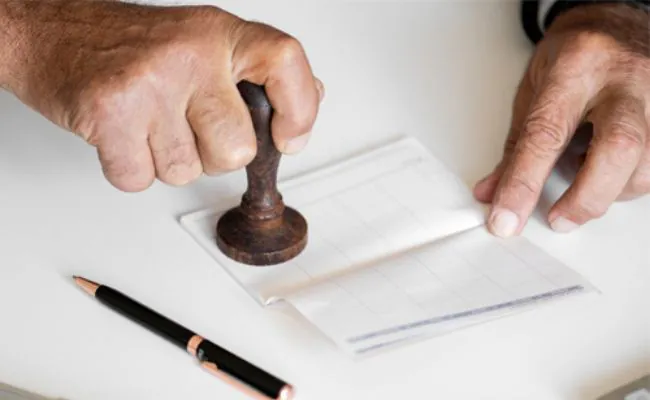
Legality is the bare minimum requirement for any piercing studio. Piercers must ensure that they and their studios carry the proper, up-to-date licenses, certifications, and registrations to legally operate at each individual studio they own.
Other cleanliness, sterilisation, and safety measures may be required depending on your local byelaws. You must ensure that your standards are always up to snuff in case of random inspections.
Although legal standards are important, top-quality piercing studios should go above and beyond.
Regulations tend to outline bare essentials rather than best practices. Because of this, it’s your job to ensure that your studio sets the standard when it comes to piercing safety.
You can learn more about opening a piercing studio in the UK by reading through our blog dedicated to this topic.
Cleanliness and sterilisation
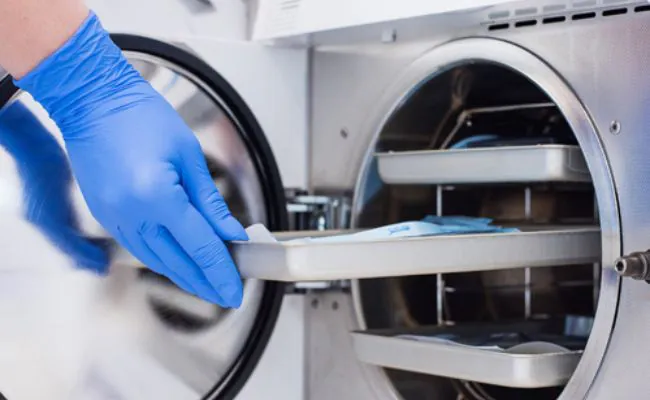
Since the act of piercing results in a hole in the body that may excrete bodily fluids, meticulous cleanliness and sterilisation is vital. Failure to follow medical-grade safety standards could result in the spread of infections and bloodborne diseases.
Make sure that you have clear protocols set to ensure that all staff members follow your standards. This should include checklists and monitoring systems so that nothing is missed.
It’s recommended that piercing studios use a colour-coding system for cleaning equipment to avoid cross-contamination.
Here are some piercing safety standards that your studio must follow.
- Provide adequate hand-washing facilities and posted guidance on proper handwashing techniques. This includes supplying proper hand soap.
- Dispose of waste materials in a safe manner. This ensures that infections from bodily fluids are not transmitted. You can develop a waste management protocol based on the NHS’s Safe and Sustainable Management of Healthcare Waste which can be found here.
- Provide PPE (personal protective equipment) for all staff. This includes gloves, aprons, and masks for use when applicable. All PPE should be single-use.
- Only use products that you are licensed to utilise. For example, local anaesthetics are for medical use only; it’s illegal for non-licensed practitioners to use them on a client, even if they have a prescription.
- Make sure that the piercing tools and environment are cleaned, disinfected, or sterilised based on top standards.
Cleaning versus disinfecting versus sterilising
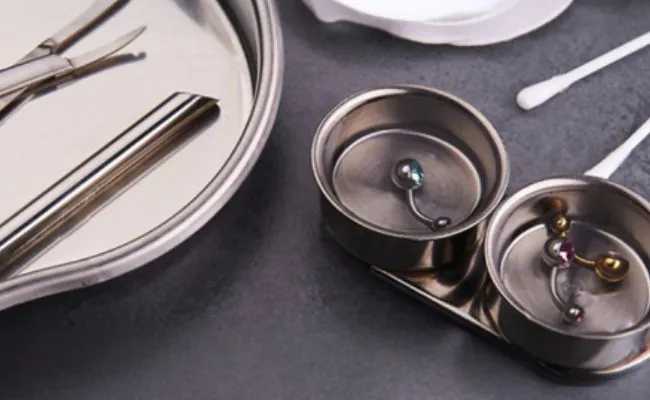
All piercing equipment and the piercing room must be decontaminated for each piercing client.
The level of decontamination depends on its contact with the client. Regardless of the level of decontamination, it cannot be recontaminated; the piercer must take great care not to cross-contaminate sanitised items.
Cleaning is the act of washing equipment after use. All equipment should be cleaned, even if it will be sterilised later. Steam sterilisation can cause dirt and bacteria to bond to the equipment, so it’s important that it’s fully cleaned before sterilisation. Cleaning should occur as soon as possible; the longer you wait, the harder it is to clean properly. It’s recommended that cleaning is carried out in a sink dedicated to equipment cleaning and separate from the hand washing station.
Although most piercing equipment requires further decontamination beyond cleaning, areas that have minimal contact with the client and do not come into contact with bodily fluids, like the piercing chair, only need to be cleaned.
Disinfecting goes a little deeper than cleaning, but it doesn’t fully sterilise the equipment. This process uses chemicals to kill viruses and bacteria on certain tools (while sanitising only kills bacteria and is, therefore, less thorough). It’s recommended that piercers use a hypochlorite solution in a well-ventilated area. Tools that should be disinfected include service trays, containers, and other equipment that’s used near the piercing and piercing tools.
Sterilisation is the complete elimination of bacteria. Autoclave sterilisation (a process that uses extreme heat and pressure) is the preferred method of in-house sterilisation. You can also purchase pre-sterilised equipment that uses gas sterilisation to ensure medical-grade sterilising. This is ideal for single-use items that make direct contact with the piercing site, like clamps and piercing needles, as these carry the highest risk of infection spread.
Pre-sterilisation uses EO gas to eliminate all microorganisms. Because it uses gas rather than heat, it can be used on tools and equipment with plastic components. These items will also come in separate, secure pouches, guaranteeing that the products are not contaminated before use. Tools that should be sterilised, whether with an autoclave or EO gas, include piercing needles, clamps, piercing jewellery, and anything that contacts the open piercing.
Staff and training

Under the Health and Safety at Work Act and the Control of Substances Hazardous to Health Act, employers are legally obligated to properly train their staff, to ensure that they have proper certification, and to review procedures in which employees are exposed to harmful substances like blood and bodily fluids.
Properly training your staff is more than a legal obligation. The health and safety of your staff as well as your customers is in your hands and it is up to you to provide the tools to set everyone up for success.
Make sure that your staff is well-versed in the following:
- Proper hand and skin hygiene
- The use of gloves and other PPE (personal protective equipment)
- What to do if exposed to bodily fluids
- The handling, storage, and disposal of waste materials
- Proper cleaning and disinfection of equipment and spaces
- Staff should also be properly immunised against bloodborne illnesses, such as Hepatitis B
Beyond health and hygiene, you should also make sure that your staff is given proper guidance concerning piercing techniques and customer service. Getting a piercing can be scary, especially if you’re a first-time piercee. Sadly, the piercing world is full of stories where a bad attitude from a piercer ruined the entire piercing experience. Train your staff to practice patience and empathy and curate a safe atmosphere at your studio, such as offering a tour of the facilities in case customers ask.
Your piercers should also view piercing as a craft that should be honed. Encourage your staff to participate in workshops and conventions to keep them up-to-date on piercing techniques. Make sure all of your piercers have gone through an apprenticeship, and before they do a certain piercing type by themselves, they should have done the piercing a number of times with guidance.
Proper piercing techniques and equipment

The piercing techniques that you choose depend on the piercing type and your style as a piercer. While some prefer freehand, others like to use a clamp to hold the region still while conducting the piercing.
You can also choose between standard needles or cannula needles. Again, this is down to personal preference.
You should never use a piercing gun due to various reasons. Not only are they difficult to aim, resulting in poor placement, but they also force a piece of jewellery through the skin, which could cause damage. Another major issue with piercing guns is that they are impossible to fully sterilise, due to the way they are constructed.
Every time you conduct the piercing, you should first mark the piercing site and have the customer confirm the placement. Spend some time on this step, as you can’t take back the piercing once it’s been completed.
Then, you’ll clean the piercing area, making sure to avoid cross contamination. Once that’s done, it’s time to conduct the piercing. Change your gloves, and prepare the sterile equipment, taking special care to avoid contamination. Perform the piercing in your preferred method, insert the jewellery, and it’s done!
Allow for some time in between appointments in case your customer needs a moment to rest. Pain is relative, and some people might feel faint after the procedure. Be sure to have water and snacks on hand, just in case.
Besides your piercing tools, you should also have an autoclave steriliser on site with someone who is trained in its operation. By UK law, you must also have an autoclave daily record sheet to ensure that it’s working properly.
Choosing the right jewellery
Choosing the proper jewellery will ensure that the piercing heals safely. If the jewellery is the wrong shape, size, or made of incorrect materials, it could result in various complications. Some piercings may even require two pieces of jewellery—one larger piece to accommodate for initial swelling and a smaller piece to be worn once swelling has gone down.

Materials
There are only a few materials that are suitable for starter jewellery pieces.
The top two recommended materials for fresh piercings are 316L surgical steel and ASTM F-136 titanium (G23). Both of these are biocompatible, inexpensive, non-corrosive, and lightweight, making them an ideal fit for fresh piercings. It’s important to note that, although both materials are considered hypoallergenic, surgical steel contains small amounts of nickel. Therefore, if your client has a nickel sensitivity, they’re best off sticking with titanium.
Other suitable materials for fresh piercings include 14k or 18k gold. (Anything less than 14k carries too many alloys to be suitable for new piercings, and anything over 18k is too soft for body jewellery.) However, these are less common choices for starter jewellery as they are more expensive.
It’s usually best to stick with less expensive options until you’re sure that the piercing will heal and that your client is happy with it.
Shape
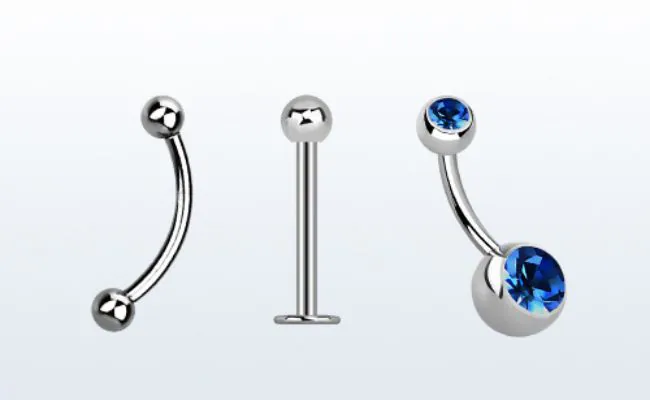
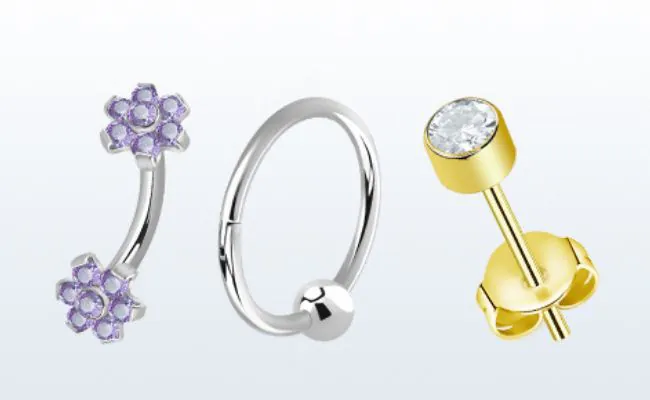
The proper jewellery shape has a huge role to play when it comes to healing a piercing.
Incompatible jewellery shapes can contribute to things like piercing bumps, migration and rejection, or prolonged healing.
Therefore it is very important that you always make sure to fit each piercing with the correct jewellery shape.
Size
Finally, you have to ensure that the jewellery size is just right; jewellery that’s too small can press against the piercing holes, and jewellery that’s too large poses a snag risk. Often, this means that you’ll fit your customer with a larger jewellery size at first, then they can come back and switch to a flusher fitting piece later.
Encourage your customers to return to you if they feel as though their jewellery isn’t the proper size; with swelling, it can sometimes be difficult to ascertain the proper jewellery size for your client.
Preparing the customer
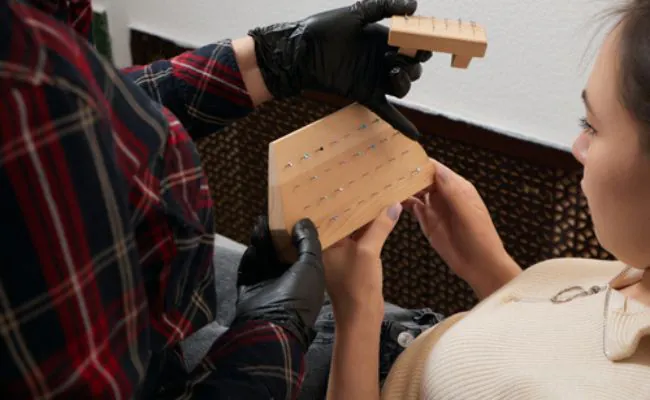
Although it’s your job as the piercer to ensure that your clients experience top safety standards, they have a part to play in that. As a business owner, you need to be aware of consumer rights, and ensure that you adhere to them. You also need to make sure your clients come to the appointment in a healthy state.
When your customers make their appointments, send them a brief guide detailing how they can prepare and what not to do.
Here are some things to include:
- Although you can take an over-the-counter painkiller prior to the appointment, make sure that it’s not a blood thinner.
- Make sure that you’re hydrated and well-fed before the appointment.
- Do not come to the appointment inebriated.
- If you want to use numbing cream, contact us first to make sure that you choose one that’s safe to use before arriving at your piercing appointment.
- Be sure to bring a legal ID.
- Once you’re in the piercing chair, be careful of what you touch, and let the piercer know of any potential cross-contamination.
Aftercare guidance
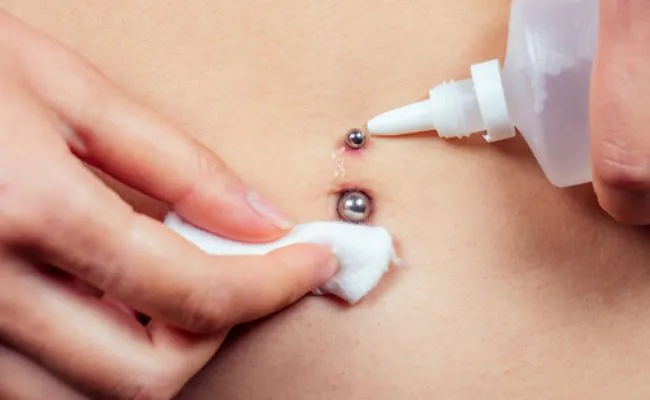
Once your customer leaves the studio, the health of their piercing is in their hands. However, you should still provide them the proper tools to give them the best chance of success.
Provide each of your clients with a detailed aftercare guidance sheet with clear instructions on how to clean their piercing and what they should and shouldn’t do.
It is also recommended to encourage clients to purchase piercing aftercare solution at your shop so that they can have the correct products right away.
Another good idea is to offer free post-appointment consultation, and urging clients to reach out if they experience any complications.
You can also build your web presence by offering aftercare tips on your website and social media channels. Create videos illustrating how to clean each piercing type, and write blog posts offering advice on how to avoid different piercing complications and when customers should come to you for help. Providing your own resources can also help your customers avoid misinformation online. There’s lots of bad advice on social media; warn your clients to ignore amateur content and stick to advice by trusted professionals.
Aftercare best practices
Speaking of aftercare, here are some aftercare best practices to pass along to your customers.
- Clean your piercing 2-3 times daily with a piercing aftercare saline solution that contains only salt and water.
- Avoid all products besides piercing aftercare solution. These include makeup, sunscreen, tea tree oil, and lotion. If your piercing comes into contact with these products, clean it as soon as possible.
- Keep your piercing as dry as you can. If it gets wet (e.g. after showering, getting caught in the rain, or sweating), dab it dry with a clean paper towel as soon as you can.
- Keep the jewellery still (do not twist the jewellery), and try not to lay on it while sleeping. This can cause trauma to the piercing site and prolong healing.
- Do not pick at the crusties that inevitably form. Instead, you can soak them with saline solution and dab them away with a clean paper towel.
- Maintain aftercare practices for the entire healing period. Ideally, you’ll visit your piercer to confirm healing is complete before stopping aftercare.
- Do not go swimming or take baths during the healing process.
- Avoid contact with outside objects to prevent the spread of bacteria. This includes things like your partner’s mouth, headphones, clothing, etc.
- Do not over-clean your piercing, as this can cause irritation that may delay healing.
Partnering with a trusted wholesaler

Part of ensuring top safety standards is choosing quality equipment. Your supplier should provide jewellery and tools that adhere to top international standards; you need to feel secure in what you use on your clients. Acha offers all of that.
We have a wide range of EO gas-sterilised jewellery and equipment, as well as a service where we sterilise any products on demand, including a certificate from the hospital. Besides this, we have a plethora of beautiful jewellery options that your customers will love, promising both piercing safety and style to your clients.
After over 20 years in operation, we’ve worked with numerous studios all across the United Kingdom and the world.
Our customers enjoy us for our top quality control, pre-sterilised equipment they can trust, and wide range of jewellery options for both fresh and healed piercings. We care about the health and safety of your customers as much as you do; quality control is a job that we take very seriously.
If you’re looking for a body jewellery supplier who can provide bespoke services, quality supplies, and who keeps your shelves stocked, look no further. For more information, contact us today!
Publication date and/or Last Updated: October 24, 2024
Author: cesar@suprank.com
Views: 655
Copyright Holder: Acha Co., Ltd.
Company info: WholesaleBodyJewellery is owned and operated by Acha, a leading manufacturer and online supplier of piercing jewellery with more than 20 years in the industry.


