
The Piercer’s Guide to Sterile Piercing Equipment
The Piercer’s Guide to Sterile Piercing Equipment
Sterilisation is the complete obliteration of microorganisms on an object. Unlike disinfection, which leaves trace amounts of microorganisms, sterilisation is a more thorough process. Since sterile piercing equipment and jewellery are safe to use in the body they are absolutely essential for every professional piercing studio.
Sterilisation isn’t straightforward. It requires specific methods for safe use in addition to careful handling to avoid contamination. Furthermore, not all body piercing equipment requires sterilisation. Some only require disinfection, and others simply need to be cleaned. It’s important that piercers understand which tools need to be sterilised, how they should be sterilised, and when a sterilised tool has been contaminated.
To help you out, we’ve put together this piercing professional’s guide to sterilisation and whether they should purchase pre-sterilised equipment or sterilise in-house.

The importance of sterilisation in piercing
Proper sterilisation of piercing supplies ensures the safety of your clients. Even trace amounts of microbes can cause infection, bloodborne viruses like HIV, fungal infections, and other really nasty things. The success of a piercing starts at the studio, and you need to feel confident that you’ve done everything you can to ensure your clients walk out of your parlour with a safe and healthy piercing.
Although the piercing process is not a medical procedure, it creates an open wound in the body and, therefore, must adhere to sterilisation methods akin to what you might see in a doctor’s office. Failure to adhere to proper standards can result in consequences ranging from annoying to catastrophic.
- Infection: If you pierce a client with a contaminated needle, you could pass along infection-causing bacteria. If infections are caught quickly, they’re easily treatable with antibiotics, but an infection left unchecked can result in more serious complications. Either way, it’s not a good look if someone develops an infection from your piercing studio. Both bacterial and fungal infections are possible.
- Spread of bloodborne pathogens: If you re-use a needle, even after disinfecting it, you could spread bloodborne pathogens, like HIV. All needles and cannulas must be single-use to avoid such consequences.
- Toxicity: Non-sterile piercing equipment can carry trace amounts of chemicals used during the manufacturing process. This could cause toxicity or allergic reactions to the piercing site.
- Liability: Suffice it to say, if numerous clients leave your piercing studio with infections or diseases, you may face legal repercussions. As a piercer, you are responsible for the safety of your clients. Always play it safe and maintain high levels of care when it comes to sterile piercing equipment.
Which piercing equipment need to be sterilised?

According to the Tattooing and Body Piercing Guidance Toolkit, which was released by the Chartered Institute of Environmental Health to promote safety consistency in tattoo and piercing parlours, here are the recommendations for sterilisation:
- Needles and Cannulas that pierce the skin must be single-use and pre-sterilised.
- Clamps must be cleaned and then sterilised if they are used multiple times or sterilised and single-use.
- Jewellery needs to be sterilised or pre-sterilised.
Used jewellery should not be worn in fresh piercings, even if it’s been autoclave sterilised. If any blood or protein material is left on the jewellery after cleaning, there’s a risk that it might become fixed during steam sterilisation, which renders it unsterile. Clamps can be cleaned, sterilised, and reused because they are used in proximity to the piercing and not inside the piercing itself.
Overview of sterilisation methods
There are only two types of sterilisation methods suitable for body piercing equipment: autoclave sterilisation and chemical gas sterilisation.
Autoclave sterilisation: A necessity for in-house sterilisation

It’s recommended that all piercing studios be equipped with an autoclave steriliser. Even if you opt for pre-sterilised equipment, an in-house steriliser ensures that you can sterilise equipment and jewellery that might have been contaminated.
This sterilisation method uses high heat and pressure to clear the equipment of microorganisms. It’s ideal for piercing tools since the heat isn’t high enough to damage needles. However, because it uses heat, it cannot be used to sterilise any tools containing plastic. Clamps made from plastic, therefore, must be pre-sterilised and single-use.
Before autoclaving any item, it must be meticulously cleaned. In order to work, the steam must have direct contact with the surface of the material that’s being sanitised, so even microscopic debris must be cleared. As mentioned previously, steam sterilisation can fix blood or protein material to the tool or jewellery surface, so stringent cleaning is crucial.
Your in-house autoclave steriliser must also undergo regular cleaning and maintenance to ensure full working order. You should also have a checklist to ensure equipment safety.
Chemical gas sterilisation: Used for pre-sterilised piercing equipment and jewellery
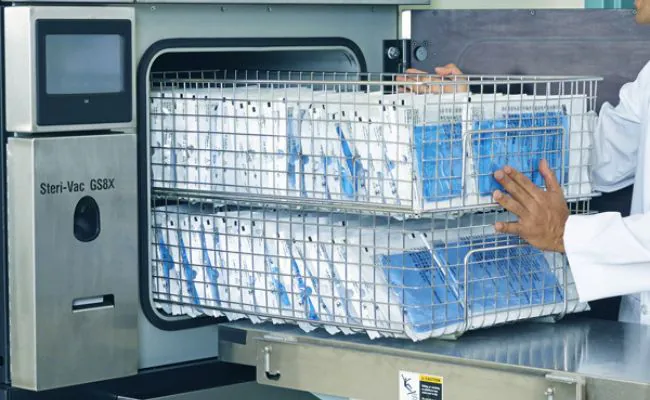
Chemical sterilisation uses EO (ethylene oxide) gas to eliminate microorganisms from the surface of piercing tools.
This method is also used in sterilising medical equipment, and since it uses gas to eliminate microorganisms, it can effectively sterilise plastic tools that cannot be sterilised with steam. Furthermore, it can often sanitise hard-to-reach places better than autoclave sterilsation.
This method is only safe to use in a proper facility. Not only is the process complex, but incorrect application could also result in toxic residual compounds that can be harmful to humans and the environment. Therefore, this type of sterilisation should only be completed by professionals in a controlled lab.
Equipment and jewellery sterilised in this manner will be individually wrapped in a sterile environment immediately after sterilisation is complete. As long as the wrapping is not compromised, the equipment will remain sterile.
UV sterilization is not a suitable method for piercing jewellery as it could damage the jewellery, especially gemstones. Although dry heat sterilisation is an accepted method by some governing bodies, it can damage piercing tools, so we recommend avoiding this method as well.
Advantages of using pre-sterilised piercing jewellery and equipment
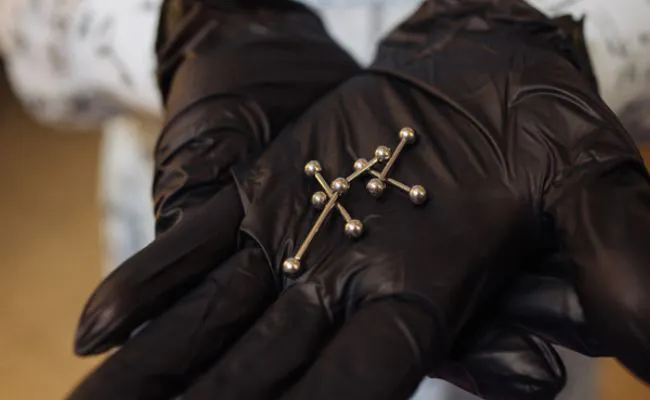
There are many things to consider when deciding whether to sterilise your jewellery and equipment in-house or whether to purchase pre-sterilised items from a reliable piercing supplier.
First, let’s explore the advantages:
- Convenience: Having a selection of piercing needles and jewellery individually packaged and ready-to-go allows you to conduct piercings quickly and safely. Once you’ve created a clean environment, you can simply grab what you need for a procedure and go.
- Safety: Pre-sterilised tools meet the highest health and safety standards, and you can feel secure in knowing that they are sterilised properly. Even if you use an autoclave steriliser in-house, it’s possible to sterilise the equipment incorrectly. To obtain sterile piercing equipment and jewellery they need to be sterilised in a controlled environment by professionals, ensuring full sterility.
- Cost-effectiveness: An autoclave steriliser requires costly maintenance, not to mention proper staff training. Although all piercing studios should have autoclave sterilisers on the premises, limiting use could reduce these costs.
- Wide selection available: We offer a wide selection of pre-sterilised needles, jewellery, and clamps suitable for any type of piercing. You won’t be left wanting when you invest in our wholesale EO-gas sterilised piercing equipment.
Disadvantages of using pre-sterilised piercing equipment and jewellery
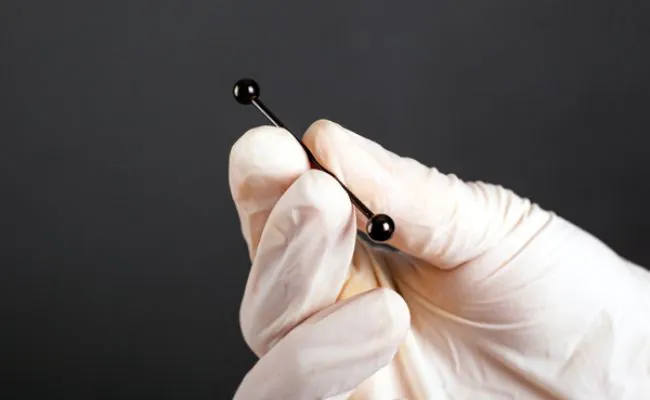
Even though it has many advantages, pre-sterilised piercing equipment isn’t always a perfect option. To decide what’s right for your studio, you have to weigh the disadvantages, too.
- Internal quality control: You must trust that your pre-sterilised equipment is properly sterilised. Therefore many studios prefer having control over the sterilisation process since they are the ones who will deal with the consequences of poor sterilisation. This leaves many studios wary of pre-sterilised jewellery.
- Proper storage: If the packaging on pre-sterilised piercing equipment is even slightly damaged, it renders it unsterile. Equipment must be properly stored and thoroughly inspected before use.
- Studios need autoclaves, anyway: Another argument is that studios should have autoclave sterilisers, regardless of whether or not they invest in pre-sterilised equipment. Therefore, pre-sterilisation can often be a hard sell to studios that have made the initial investment into an autoclave steriliser.
Questions businesses should ask themselves

So now it comes down to whether you should sterilise in-house or purchase pre-sterilised equipment? Before making this decision, you should ask yourself a few questions:
- Do we have the required expertise and resources to sterilise in-house?
- Can we ensure consistent sterilisation quality to protect our customers?
- Is the convenience and reliability of pre-sterilised jewellery worth the investment?
Ultimately, your choice depends on your confidence in your pre-sterilised equipment supplier, your ability to properly sterilise equipment in-house, and your budget. There’s no right answer; you must choose what you think is best for your staff and clients.
Conclusion
Proper sterilisation of needles, cannulas, piercing jewellery, and clamps is crucial to the piercing process. Failure to correctly sterilise your equipment could lead to serious consequences for your clients and huge liability issues for your studio.
We understand that trusting your piercing equipment supplier with such an important task can be difficult. Our pre-sterilised equipment follows the top global standards and rigorous quality control. Don’t take our word for it; just look at the over 2000 happy customers we’ve helped during our more than 20 years in operation.
You don’t have to make this decision alone. Our customer service team is ready to answer any questions you might have concerning our sterile piercing equipment. Give us a call, and we’ll help you make the best decision for your business.
Publication date and/or Last Updated: June 11, 2024
Author: cesar@suprank.com
Views: 743
Copyright Holder: Acha Co., Ltd.
Company info: WholesaleBodyJewellery is owned and operated by Acha, a leading manufacturer and online supplier of piercing jewellery with more than 20 years in the industry.


