
Everything to Love about the Snug Ear Piercing
Everything to Love about the Snug Ear Piercing
The cultivated cartilage look is one of the defining jewellery choices of the 2020s. Its rise has sparked interest in previously overlooked piercing styles like the snug ear piercing. But what exactly is the snug piercing, and why do people love it so much? Here’s our guide.

What is a snug piercing?
A snug ear piercing is a horizontal piercing that appears in the anti-helix (the fold of cartilage right beside the rim of the ear) above the anti-tragus (the triangular cartilage right above the lobe along the ear’s outer rim). It’s so-named because the piercing area is quite snug; in fact, few people carry anatomy suitable for this type of ear piercing. However, those who do not have the proper ear shape for snug piercings can get the faux snug piercing instead. This piercing style consists of two piercings—the outer conch and an auricle piercing—that emulate the snug piercing aesthetic.
Reasons to love the snug piercing
Snug piercings draw people for a number of reasons. Because the piercing area is so small, it creates a unique look requiring the daintiest jewellery. This makes it an ideal piercing for those who desire a petite singular piercing or want to fill out their cultivated cartilage aesthetic. Its location also creates a distinctive look. Many people cannot get this piercing, so even in a time when cartilage piercings are commonplace, the snug piercing remains unique.
If you have clients who come to you seeking a rarer piercing that carries mainstream acceptance, then the snug ear piercing might be just for them.
Snug piercing risks
The snug ear piercing carries similar risks to any cartilage piercing along with some unique risks associated with its placement and the thickness of the cartilage that it goes through. Here are some of the top dangers of snug piercings you should impart to your clients.
- Piercing bumps: Because ear cartilage takes a long time to heal, it’s more susceptible to piercing bumps. These types of bumps come in many shapes and arise for a multitude of reasons, so you should encourage your clients to come back to your studio if a piercing bump forms so that you can take a look and give them some ideas for treatment.
- Pain during healing: The location of the snug piercing makes it difficult to use phones, wear headphones, and do other daily tasks. This can lead to some discomfort weeks after the actual piercing takes place. Encourage your clients to refrain from holding their phone against their ear, avoid headphones that go over the ear, and keep from sleeping on the side of the piercing until it has fully healed.
- Infections: Although real piercing infections are uncommon (as long as the wearer keeps their piercing clean), they do happen. It’s important to let your clients know how to properly care for their piercings so that an infection doesn’t develop.
- Rejection and migration: This is when the body moves the jewellery because it thinks that the jewellery shouldn’t be there. If the piercing holes get bigger or the jewellery has clearly moved, have your clients come to you so that you can ascertain if the migration has stopped or if they need to remove their jewellery.
Snug piercing aftercare
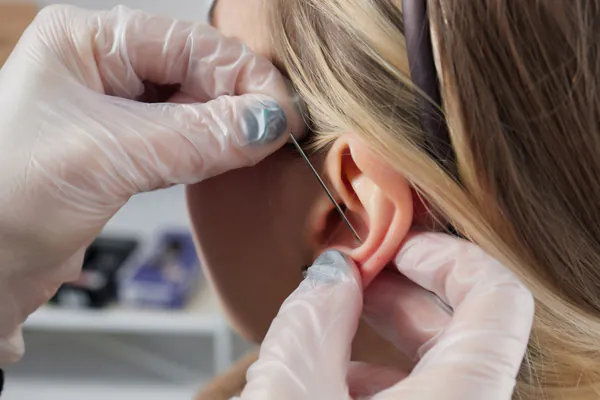
The above risks can mostly be mitigated through proper aftercare practices. As long as your clients keep their piercings clean, protect them from snags, and maintain care until you or another professional has confirmed that healing is complete, they should avoid any major risks.
To keep their snug piercings hygienic, tell your clients to clean them 2 – 3 times daily with a piercing aftercare saline solution. They can do this by either spraying the piercing directly or soaking a clean paper towel with the saline solution and gently wiping the entry and exit points of the piercing.
Although some people mix their own saline solution at home, the Association of Professional Piercers no longer recommends this practice as it’s easy to get the mixture wrong.
Besides cleaning their piercings daily, your clients should follow some general piercing aftercare rules.
- Avoid water, and stay away from oceans, lakes, and tubs. Along those lines, your clients should keep their piercings as dry as possible. Tell them to dry their piercing with a clean paper towel immediately after leaving the shower, clean and dry their piercing after they work out, and keep an eye throughout the day to ensure that their snug piercings stay free from dampness.
- Do not twist the jewellery; try to keep it as still as possible during healing.
- Do not pick at the crusties that form. Instead, dampen them with saline solution or purified water and gently dab them away.
- Avoid products like tea tree oil. Many people recommend using tea tree oil to treat piercing bumps or other complications, however, tea tree oil is not safe to use on healing piercings. Your clients should only use piercing aftercare saline solution.
- Try not to place pressure on the jewellery by sleeping on the side. For clients who are side-sleepers, you can recommend that they use a neck pillow and place their ear in the hole of the pillow.
Snug piercing jewellery
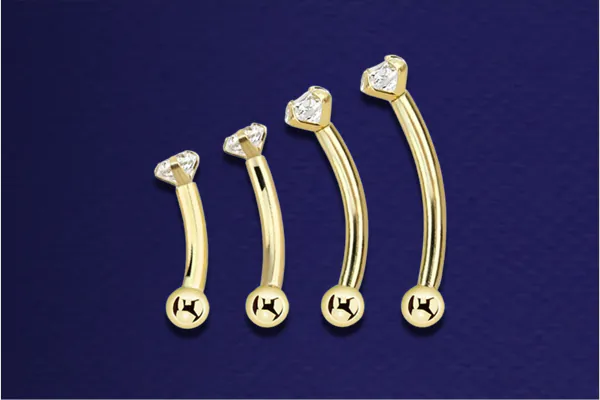
The snug ear piercing accepts super dainty jewellery that fits in the teeny snug piercing area. For fresh and healing piercings, a teeny curved barbell (aka banana) is the typical snug jewellery choice, although in some cases, the anatomy might prefer a small straight barbell.
Once the piercing has healed, your clients can try snug piercing hoops for a really fun look. Before they switch to snug piercing hoops, you should encourage them to come to you for a jewellery change so that you can help them choose the proper snug piercing jewellery size.
The faux snug piercing accepts cartilage piercing studs. If your clients want to emulate the snug piercing look, as the faux snug piercing is intended to, they should consider two identical cartilage studs, like those with small gemstones or tiny beads, to look like a small curved barbell.
We offer plenty of snug piercing jewellery for your clients to love. Our banana barbells include one bead end and one cubic zirconia end, anodised options, flower ends, and more. We also have a selection of snug piercing hoops and cartilage studs that are well-suited for the faux snug piercing look.
Snug piercing FAQs
Here are some of the top-asked questions that your clients are likely to pose when they come to get a new snug piercing.
How painful is a snug piercing?
Because the cartilage where the snug piercing appears is quite thick, the snug piercing carries a higher pain threshold than most other cartilage piercings. It’s difficult to gauge how much the piercing will hurt, as it greatly depends on the individual, but most people who get this piercing say that it falls mid-high on the pain scale.
As mentioned above, its location causes it to be easily bumped and snagged during the healing process. This means that your clients might experience light discomfort for a while after getting pierced. Make sure that you relay this information to your clients and guide them toward another piercing choice if they handle pain poorly.
How much do snug piercings cost?
The answer to this question greatly depends on location and the studio, but they typically cost around £20 – £50. This does not include the price of the snug piercing jewellery.
If your clients are wary about the price, remind them that, for things like piercings, it’s better to pay more and have it done right than to do it on a budget. Cartilage piercings, in particular, can go really wrong if they’re not pierced correctly, so it’s always better to spend a little more and get it done right than deal with months of issues to save a bit.
How long does a snug piercing take to heal?
Snug piercings take 6 – 9 months to heal at a minimum. Cartilage is notoriously difficult to heal, and as a result, it sees its fair share of complications. Often, these complications arise because the clients believe their piercings are done healing and stop aftercare practices prematurely. Encourage your customers to come to you to confirm that healing is complete before stopping aftercare.
It’s important to remember that even if they do everything right, snug ear piercings can take longer than nine months to heal, so they should always have a professional confirm that everything has healed nicely no matter how long it’s been since they got pierced.
The snug ear piercing is one of many cartilage piercing styles predicted to be popular in 2024. As a piercing studio, you must prepare yourself by brushing up on the finer points of snug piercings and stocking up on snug piercing jewellery.
Publication date and/or Last Updated: May 19, 2024
Author: cesar@suprank.com
Views: 568
Copyright Holder: Acha Co., Ltd.
Company info: WholesaleBodyJewellery is owned and operated by Acha, a leading manufacturer and online supplier of piercing jewellery with more than 20 years in the industry.


