
Medusa Piercings: A Striking Statement with a Mythical Touch
Medusa Piercings: A Striking Statement with a Mythical Touch
Medusa, whose appearance was so striking that it turned any who looked upon her into stone, is an apt namesake for this gorgeous lip piercing. Centrally placed above the lips, the Medusa piercing is stunning when decorated with an elaborate gemstone or a simple bead. As an oral piercing, it carries unique risks and considerations that you should pass along to your clients; oral hygiene and correct jewellery sizing are musts. Here’s what you need to know.
What is a Medusa piercing?
Also known as the philtrum piercing, the Medusa lip piercing is centrally positioned above the lip in the small divot between the lips and the nose. Its prominent location is sure to draw the eye and give pause—almost as if the viewer was turned to stone. As such an enchanting piercing choice, you’re sure to have plenty of customers seek out this gorgeous aesthetic.
How to prepare your clients
Before your clients arrive for their appointment, provide instructions on how they can prepare. Warn them not to take blood thinners and ensure they arrive fed and well-rested.

After you’ve prepped them for the procedure, spend ample time marking the piercing location and making sure they’re happy with it. Because the Medusa lip piercing is placed so prominently, you need to be extra certain that it’s situated correctly. There will be no hiding it.
When it comes time for the piercing, do what you can to make the experience as comfortable as possible. Your customer will probably ask, “Do Medusa piercings hurt?” Most people rate it at around a 5 out of 10 on the pain scale, but everyone’s different, so each client may experience various levels of pain. You can help alleviate this by conducting the piercing as smoothly as possible and guiding them through breathing exercises.
Choosing initial jewellery
Choosing the right jewellery for fresh Medusa piercings can be challenging. Lip piercings tend to swell more than other piercing types, and the jewellery needs to be long enough to accommodate it. On the other hand, you also need to ensure that the post is short enough so that the client doesn’t accidentally chomp on the jewellery when they eat and it doesn’t move around as they talk. Often, this means that the client will have to return to be fitted with a smaller jewellery piece once their swelling has gone down.
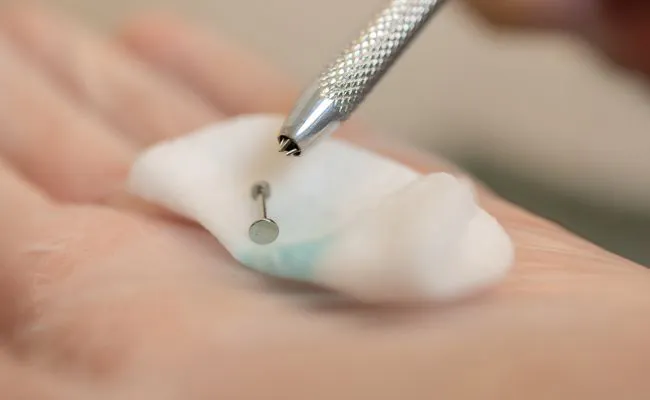
The jewellery shape is also important. Medusa piercings accept straight posts with a flat back that sits flush against the skin. It’s essential that Medusa jewellery doesn’t rub against the gums and teeth, and a flat back is the best way to avoid that.
Jewellery materials are the final consideration for fresh Medusa piercings. There are a handful of appropriate materials for new piercings, but most studios choose between 316L surgical steel or G23 titanium. Both materials are biocompatible, non-corrosive, lightweight (although titanium is lighter than steel), and inexpensive. The biggest difference between the two is that surgical steel may include trace amounts of nickel. For most people, this slight presence of nickel is negligible, but it could cause a reaction for those who have a severe nickel sensitivity.
14k or 18k gold can also be worn in fresh piercings. However, it’s more expensive than surgical steel and titanium, which is why most people wait until their piercing has successfully healed before investing in pricier Medusa jewellery pieces.
Medusa piercing healing and aftercare
Once you’ve completed the piercing, the rest is up to your clients. Set them up for success by communicating aftercare best practices and offering free consultation throughout the healing period.

How long do medusa piercings take to heal?
Medusa piercings typically take around 2 – 3 months to fully heal. Healing times can vary depending on the individual, how well they took care of the piercing, and whether any major trauma occurred. Because of this, you should always have your customers come to you to confirm that healing is complete before they stop aftercare practices.
Cleaning a Medusa piercing
Just like any other piercing, Medusa piercings should be cleaned 2 – 3 times daily with a piercing aftercare saline solution. Although saline solution can be mixed at home, we recommend using a piercing aftercare product, since it’s easy to get the salt-to-water ratio wrong. Whichever aftercare solution they choose should only include two ingredients: salt and water. Some piercing aftercare products contain ingredients like tea tree oil, but these can cause irritation.
There are a few ways to clean Medusa lip piercings, depending on preference. Here are two common approaches:
- Spray the front and back of the piercing directly with saline solution.
- Wet a clean paper towel with saline solution and gently wipe the front and back of the piercing.
Aftercare rules
Besides cleaning the piercing, there are quite a few things that piercees need to keep in mind throughout the entire healing period. These are fairly extensive, so you should consider printing them out so your clients can always have them on hand.
- Keep the jewellery as still as possible. This means limiting talking, laughing, and chewing for the first few days after getting pierced.
- Keep an eye on the jewellery. If your lips swell and begin to press against the piercing holes, come back to the piercing studio to get fitted with a longer piece. On the other hand, if the post is too long and moves around too much, you should be fitted with a shorter piece.
- Pay attention to the backing of the jewellery on the inside of your mouth. If it rubs against your teeth or gums, visit your piercer to discuss placement issues.
- Take extra care while brushing your teeth. Avoid mouthwash that contains alcohol, as this can be irritating to the new piercing.
- Opt for soft foods for the first few days after getting pierced as you get used to the new jewellery, and be careful that the food doesn’t stick to the jewellery. Cold drinks and ice cream can help soothe the piercing.
- Avoid spicy and acidic foods, as these can be irritating.
- Do not wear makeup, lotion, sunscreen, or any other products on or around the piercing site.
- Avoid kissing or oral activities to protect the piercing as it heals.
- To reduce overnight swelling, keep your head slightly elevated as you sleep for the first few days.
- Avoid using straws for the first few days as they can contribute to swelling and discomfort.
- Keep the piercing dry, and avoid swimming or soaking in hot tubs.
- Do not touch or twist the jewellery. When crusties form around the piercing site, gently dab them away with a damp paper towel rather than picking at them.
Risks and considerations
The biggest question your clients may have is, “Do medusa piercings damage teeth?” The somewhat unsatisfying answer is maybe.
Ideally, Medusa piercings will be placed so that the back of the jewellery doesn’t touch the teeth or the gums. Sometimes, however, piercees wear jewellery that’s too long, or they don’t pay attention to where the jewellery sits, which could cause problems. If the Medusa jewellery rubs against the teeth and gums, it may result in tooth decay and eroding gums over time. Additionally, jewellery that doesn’t have a flush fit could get chomped upon, leading to chipped teeth.

As a piercer, all you can do is place the piercing properly and relay the risks of wearing Medusa piercing jewellery that’s the wrong size. The rest will be up to the piercee.
Another risk for Medusa piercings is infections. These typically occur due to poor hygiene and can be avoided by keeping the piercing clean. Signs of a piercing infection include skin that’s hot to the touch, inflammation, tenderness, bleeding, and yellow or green discharge.
Even after the piercing has fully healed, it’s important that piercees keep their mouth and jewellery clean. Jewellery in the mouth can harbour plaque and bacteria that can cause oral health issues. Besides brushing and flossing their teeth regularly, piercees should also take out and clean their Medusa piercing jewellery every few weeks to avoid this issue.
Medusa piercing jewellery
Although there’s only one jewellery type that’s appropriate for the Medusa lip piercing—straight posts with a flat back, otherwise known as labret rings—there are still tons of styles to choose from.
Many people love the look of a big, bold gemstone that immediately draws the eye. Similarly, piercees can choose cute hearts, flowers, half moons, and other decorations that really stand out. Those who prefer subtler aesthetics can opt for tiny bead ends or dainty gemstones that offer the slightest splash of colour.
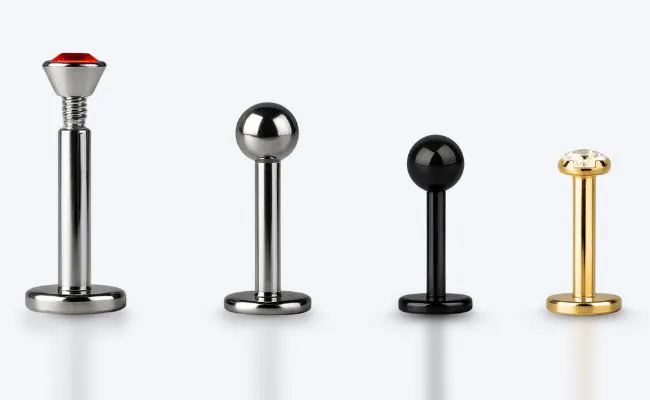
Once the Medusa piercing has fully healed, piercees can check out acrylic jewellery options. These are softer than metal, so they can alleviate potential damage if the jewellery is accidentally chomped upon.
The Medusa is one of those piercings that needs a collection of jewellery pieces. To accommodate this, piercers should have plenty of Medusa piercing jewellery so that their customers can keep coming back for more.
Where to buy wholesale Medusa jewellery
To ensure that you have plenty of Medusa jewellery on hand, you need to partner with the very best piercing supplier. You’ve found them here. We have our finger on the pulse of the top piercing trends as well as the timeless classics, ensuring that our customers always have access to the Medusa piercing jewellery they crave.

For over 20 years, we’ve worked with piercing studios all over the UK and the world, offering top quality and style. Your customers’ health and safety is our top priority, which is why we practice the highest standards of quality control. When you partner with us, you can feel comfortable letting us take care of important parts; all you have to do is pick out the styles that your customers will love.
Check out our huge selection of labret rings, including EO gas sterilised and internally threaded jewellery options. We also offer piercing kits and display cases, becoming a one-stop shop for all of your piercing needs.
Interested in learning more? Contact us today!
Publication date and/or Last Updated: February 10, 2025
Author: cesar@suprank.com
Views: 611
Copyright Holder: Acha Co., Ltd.
Company info: WholesaleBodyJewellery is owned and operated by Acha, a leading manufacturer and online supplier of piercing jewellery with more than 20 years in the industry.


