
The Piercer’s Guide to Daith Piercings: Myths, Aftercare, and More
The Piercer’s Guide to Daith Piercings: Myths, Aftercare & More
The daith piercing is a trendy, beautiful piercing that many clients seek. Because of its mainstream acceptability, people of all ages and backgrounds love this piercing style. However, its long healing period may pose an issue for some, and there are a few misconceptions that you may need to address. Here’s our guide.
What is a daith piercing?
Daith ear piercings are located at the base of the crus helix. In layman’s terms, it’s that bit of cartilage right above the entrance to the ear canal. If you stick your finger in your ear, you’ll feel a sort of cartilage shelf sitting above it. That’s where the daith piercing goes.

Daith piercings are popular for their unique style and ability to pull together a cultivated cartilage look. Decorated with hoop-style daith jewellery, it creates a head-turning allure that many piercing lovers crave.
Although some claim getting your daith pierced has various health benefits, this has never been scientifically proven.
Any positive health outcomes experienced after getting a daith piercing are largely attributed to the placebo effect. If your client seeks a daith piercing for medicinal purposes, make sure they understand that it is not a medical procedure.
How much do daith piercings hurt?
Although the cartilage is thicker in the daith area, which leads many to believe it will hurt more than other cartilage piercing types, many report that daith piercing pain is actually less than a traditional helix piercing. Piercees can expect their pain level to be mid-low on the pain scale.
Of course, pain is relative, and some will experience more pain than others. It’s always important to adequately prepare your clients and guide them through breathing exercises to make the experience as pain-free as possible.
Piercing the daith
The location of the daith can make this a challenging piercing to complete. Because it’s placed at the entrance of the ear canal, it can be difficult to access with a standard piercing needle. For this reason, many piercers choose curved needles to conduct this piercing more easily.
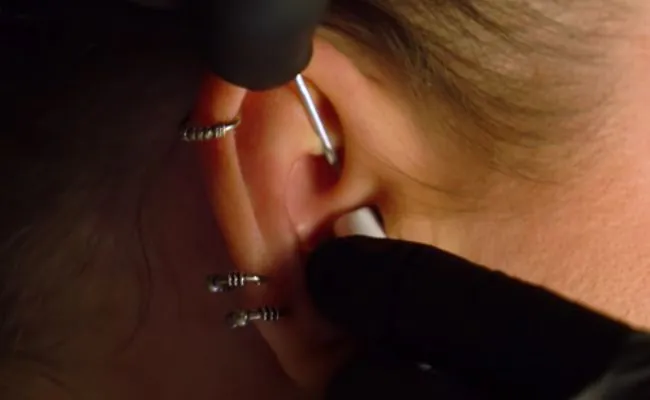
As with any piercing, you should mark the area to be pierced and have them double- and triple-check that the placement is correct. You can’t take back a piercing, and you must be completely sure they receive the placement they want.
The great thing about daith piercings is that most people have suitable anatomy to get one. This means you won’t have to give bad news or brainstorm an alternative piercing choice.
It is important however, to ensure that your client can commit to the lengthy healing period. If they’ve had trouble healing piercings before, or if they tend to stop aftercare practices before the piercing is fully healed, consider leading them toward a piercing with a shorter healing time.
Healing and aftercare
Like all cartilage piercings, the daith piercing healing time is substantial: about six to nine months or even longer.

Although, anecdotally, some people see shorter healing times, we recommend relaying a longer healing time range to your clients just to be on the safe side. This will help encourage them to maintain aftercare practices throughout the entire healing period.
There are no consequences to continuing aftercare practices after the piercing has healed. On the other hand, stopping aftercare practices too early can lead to complications such as piercing infection, bumps, migration, and more.
Daith piercing healing stages
It can be helpful to your clients if they understand a piercing’s healing stages. This could help them maintain aftercare practices throughout the healing period and better care for their piercing. Here are the four stages of healing daith ear piercings.
- Hemostasis: This is when the piercing is fresh. The body’s first response is to stop any bleeding, so it will constrict blood flow and begin blood clotting. This stage lasts for about two days, so it’s completely fine if there’s light bleeding during the first couple of days after getting pierced.
- Inflammatory: During the second healing phase, the body works to eliminate bacteria and stave off infection. White blood cells are rushed to the area, which causes some swelling and redness. This stage typically lasts about a week, so piercees shouldn’t be concerned if they feel slight inflammatory discomfort for the first week or so after getting pierced. For piercings, it’s not uncommon for swelling and discomfort to last a little longer since the jewellery impacts the healing process.
- Proliferation: Once the body has taken steps to stop bleeding and eliminate bacteria, it starts the process of closing the wound. For a piercing, this means mending the skin to create the piercing tunnel. The skin will mend from the outside in, so it may appear as though the proliferation phase is complete before the skin has had a chance to fully mend on the inside. Once the proliferation phase has ended, then aftercare practices are no longer needed. For the daith piercing, the proliferation phase lasts around 6 – 9 months or longer.
- Remodeling: During this final stage, the body internally strengthens the new tissue. It begins after the proliferation phase has ended, and it can take a few years to complete this process. This is why, even when aftercare practices are finished, piercees should still practice care around their piercing since the tissue is still delicate.
How to clean a daith piercing
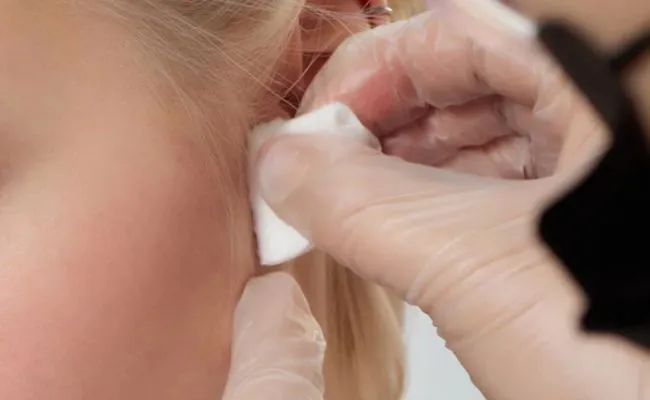
One of the most important parts of piercing aftercare is keeping the piercing clean. This can be done in two easy steps 2 – 3 times daily:
- Spray a clean paper towel with piercing aftercare saline solution.
- Gently clean the entry and exit holes of the piercing with the saline solution.
Some people prefer to spray the piercing aftercare solution directly onto the piercing and let it dry. Others recommend a warm saline compress. The important part is that it gets cleaned and avoids exposure to bacteria.
Aftercare rules
Here's a list of aftercare rules to pass along to your clients.
- No swimming or baths. You must keep your piercing as dry as possible, which means avoiding lakes, pools, and hot tubs for the duration of the healing period.
- Avoid contact with dirty items, like phones, headphones, or hands. For the entire healing period, do not wear earbuds and keep your phone away from your face.
- Do not lay on the piercing. If you need to sleep on the same side as the piercing, get a neck pillow and place your ear in the hole so that it doesn't touch anything as you rest.
- Avoid exposure to any products besides piercing aftercare saline solution. This includes makeup, perfume, tea tree oil, and soap.
- When you get out of the shower, be sure to dry your piercing immediately with a clean paper towel.
- Do not pick at crusties that form around the piercing site. Instead, use saline solution or purified water to dampen them and gently dab them away with a clean paper towel.
- Do not twist the jewelry, as this can damage the delicate healing tissue. You should try to keep the daith jewellery as still as possible.
- Do not overclean your piercings, as this can cause irritation.
- Avoid using any products on or around the piercing besides piercing aftercare saline solution. This includes alcohol, tea tree oil, lotion, soap, etc.
Risks and complications
The risks of daith piercings are the same as any other piercing type. Let’s look at the most common complications and how they can be avoided.
- Piercing infections: These are normally caused by poor aftercare practices and can be avoided with good hygiene. However, they can occur even if you keep the piercing clean, so it’s important to know the signs. Your client may have a piercing infection if it has green or yellow discharge, is painful, red, itchy, inflamed, bleeding heavily, and/or feels feverish around the piercing site. These symptoms will often arise quickly and severely.
- Piercing bumps: There are a wide range of different piercing bumps that can appear for various reasons. Common piercing bumps are irritation bumps, pustules, blisters, or scarring. Some arise from dampness, others from poor hygiene, and still others from trauma to the piercing site. If your client complains about piercing bumps, have them come to you so that you can take a look and ask them about their daily habits. Most of the time, the cure for piercing bumps is eliminating the source of creation and waiting for them to heal on their own.
- Migration and rejection: Although migration and rejection are rare in daith piercings, they’re still worth noting. When the body decides that the daith piercing jewellery should not be there, it may push the jewellery to a different spot (migration) or attempt to push the jewellery out entirely (rejection). This usually occurs after the jewellery is snagged or if improper jewellery materials are used, but it can also randomly occur. Signs include red, flaky skin around the piercing site, a noticeably larger piercing hole, or jewellery that’s clearly moved or hangs more loosely. Unfortunately, once the body starts pushing the jewellery out, it can’t be stopped. The best solution is to retire the piercing and try again once the piercing hole has healed.
Dispelling myths about daith piercing benefits
Recently, various people have claimed that the daith ear piercing can help with relieving migraine pain.

This theory has to do with acupuncture since there’s an acupuncture point in the daith area that is said to help with migraines when activated.
The idea is that, by permanently activating this acupuncture point with daith jewellery, you can cure migraine pain.
The problem is that there is no scientific basis for this claim, and many medical professionals believe it to be a placebo effect. Therefore, do not advertise the daith piercing as a medicinal benefit, and if a client comes to your studio seeking a daith piercing solely for its healing properties, advise them against it. The daith takes far too long to heal to get one because of an urban legend.
If someone comes to your studio seeking the daith piercing for its aesthetics, and the migraine “cure” could be a nice side benefit, then they can go for it! The placebo effect is strong, and if they can enjoy a gorgeous piercing with pain relief, then it’s a win-win.
Daith piercing jewellery
The daith piercing wears various hoop styles, including ball closure rings, circular barbells, and seamless hoops.
When fitting your customer with a fresh piercing, opt for daith jewellery that is either made of 316L surgical steel or ASTM F-136 titanium, as these materials are lightweight, inexpensive, and won’t irritate healing tissue.
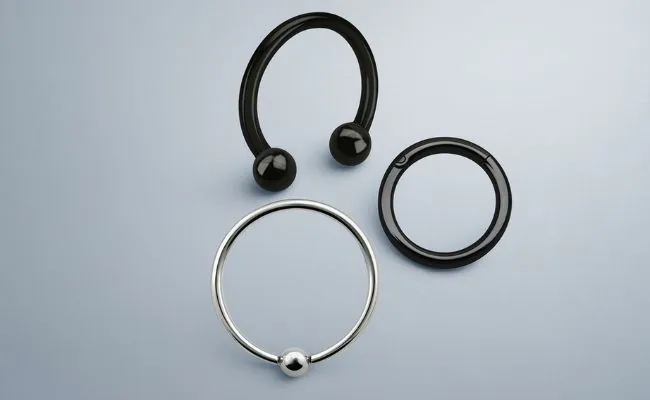
You should also choose simple daith piercing jewellery that won’t snag or pull on the piercing. Although other jewellery materials, like 14k or 18k gold, are suitable for fresh piercings, they’re more expensive.
It’s best to choose inexpensive materials until you are sure that the piercing has successfully healed. If the jewellery contains threading, ensure it’s either unthreaded or internally threaded. Externally threaded jewellery has sharp edges that can harm the delicate tissue as it’s inserted into the fresh piercing.
Once the piercing has healed, your customers can choose from a wider range of daith piercing jewellery options. While some people love the look of sleek, seamless gold daith jewellery, others prefer more elaborate looks with gemstones or heart-shaped hoops. Whatever style your clients prefer, we have plenty of daith jewellery for UK studios. We also offer individually packaged EO gas sterilised piercing tools and starter jewellery, ensuring that you have the equipment you need ready on hand.
Partnering with Acha will ensure that your studio is always stocked with unique daith jewellery options your customers crave. Start shopping now!
Publication date and/or Last Updated: November 16, 2024
Author: cesar@suprank.com
Views: 612
Copyright Holder: Acha Co., Ltd.
Company info: WholesaleBodyJewellery is owned and operated by Acha, a leading manufacturer and online supplier of piercing jewellery with more than 20 years in the industry.


