
Common Piercing Complications: Infection, Rejection & Bumps
Common Piercing Complications: Infection, Rejection & Bumps

Piercing complications are a top concern of those getting pierced. As a piercing professional, it’s your job to understand common piercing issues so that you can help your clients address them should they arise.
Luckily, most piercing complications can be avoided through proper aftercare. If a problem manifests, most piercing issues will either go away on their own or require small changes to rectify. It’s very rare that a piercing complication will evolve into something dangerous, and if it does, it’s usually the result of poor hygiene and neglecting the piercing.
To ensure that you’re prepared, here are some of the most common piercing complications that your clients may experience.
Piercing bumps
Piercing bumps are one of the most common piercing issues. They are also one of the most difficult to diagnose, as they come in many forms and can appear for various reasons. Here, we outline the more common types and causes of piercing bumps.
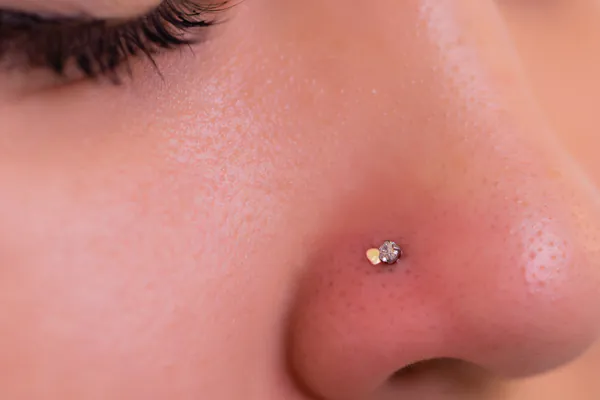
Pimples
Also referred to as “piercing pustules,” pimples are characterised by their small size, red inflammation, and pus. They can often recur in the same place.
Pimples are treated as a small localised infection, and they occur due to invading microorganisms. Because of this, they can be treated by using a warm saline soak on the infected area. The best way of avoiding pimples is by keeping the piercing as clean as possible.
If the pimple persists, your client may need to visit their doctor to find the true source of the issue. Although it may be tempting, piercing pimples should not be popped, as this could cause further damage to the delicate tissue.

Irritation bumps
The term “irritation bump” can cover a range of problems from many potential sources. It’s typically characterised by red, irritated, and itchy skin, and it often manifests as a small rash or as bumps beneath the skin.
Irritation bumps occur when the surrounding tissue reacts to something it doesn’t like. Most of the time, it’s caused by a reaction to cheap jewellery materials, chemicals (like those in soaps and perfumes), and other irritants.
Luckily, irritation bumps go away on their own once the irritant is removed. The tricky part is determining the irritant. If your clients come to you with this type of reaction, troubleshoot the issue by asking a few questions.
- What jewellery material are you wearing? If they’re wearing improper jewellery materials, recommend that they switch to a titanium G23 jewellery piece, which is hypoallergenic.
- What products have you been using on the piercing? If the piercing is still healing, they should only be using a saline solution that contains two ingredients: purified water and salt. A common tip circulating the internet is to use tea tree oil on your piercing to clean it or to heal piercing bumps. However, this product can be incredibly irritating on healing piercings and should be avoided. If your client’s piercing is fully healed, ask them about any soaps, perfumes, and lotions that they are using around the piercing and recommend that they switch to something gentler.
- Are you keeping the piercing dry? In a healing piercing, bumps can appear as the result of dampness around the piercing area. Encourage your clients to dab their piercing dry with a clean paper towel the minute they exit the shower, drying the piercing after working out and avoiding activities in which the piercing might become damp.

Hypergranulation tissue
Hypergranulation is when there’s an excess growth of granulation tissue, resulting in a protuberance around the piercing. It’s seen most often in lip, nostril, and navel piercings, although it can appear elsewhere.
This type of piercing bump is typically caused by trauma or friction around the piercing site that makes it difficult for the piercing to heal properly. It is best avoided by keeping the piercing safe and still until healing is complete.
If hypergranulation should occur, your client would be best served by seeing a dermatologist. Often, it can go away with prescribed treatment. However, if it doesn’t, the client may need to retire their piercing.
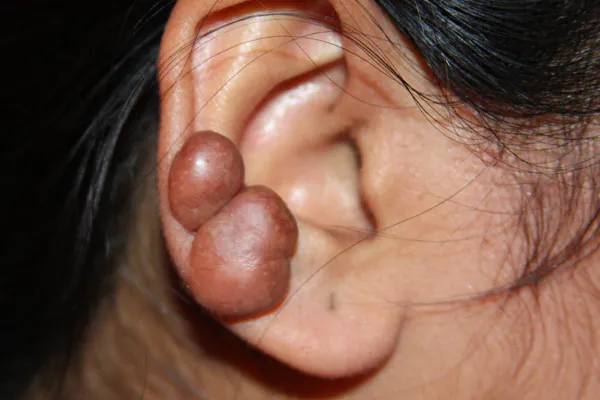
Keloids
Keloids are one of the most misattributed complications in the piercing world. Although many people—professionals and piercees alike—refer to any piercing bump as a keloid, this is woefully incorrect.
Keloids are thought to be a genetic skin issue that only occurs in about 10% of all people. They manifest as a large, raised, and discoloured bump—much larger than your average piercing bump.
Keloids are characterised by an excessive overgrowth of scar tissue. Although they can appear on piercings, they may arise after any injury that causes tissue damage. Because they are genetic, if your client has never had a keloid before, and no one in their family has, either, then it’s unlikely that a keloid will form after getting pierced, although it can happen.
How to get rid of piercing keloids: If your client comes to you with a keloid, their only option is to head to a dermatologist to have it removed.
Migration and rejection
When piercing jewellery has noticeably moved, this is referred to as rejection and migration. Piercing migration is when the jewellery moves from its original piercing point but eventually stops and heals in its new location. Piercing rejection is when the jewellery has migrated past the point of no return, and the piercing cannot be saved.
Both piercing rejection and piercing migration can be spotted by the following symptoms:
- The piercing hole appears bigger.
- The skin around the jewellery becomes red and flaky.
- The skin around the jewellery is thinner than when it was pierced.
Migration and rejection can occur for a few reasons. If the piercing isn’t placed deeply enough, especially piercings in the eyebrow or navel, the body might not accept it. It can also happen if the piercing is placed at an incorrect angle. Another common reason for piercing rejection and migration is the use of harsh soaps or aftercare products on a healing piercing or trauma to the piercing site. In some cases, piercing migration and rejection can occur spontaneously.
How to stop piercing rejection
Unfortunately, piercing rejection spells the end of the piercing. If piercing migration is noted, the client should stop using harsh products on their piercing and keep it as safe as possible to hopefully stop the migration process. If it migrates past the point of no return and develops into piercing rejection, then they will need to retire the piercing and let it heal. If they keep the jewellery in, it could lead to some scarring. The good news is once the area has fully healed, they can usually come back and try getting pierced again.
Piercing rejection vs infection
Piercing infections and rejections are two very different things, but lots of piercing issues are misattributed as piercing infections, so it’s worth noting the difference between the two.
Piercing rejection is when the jewellery is being pushed out of the body, so the signs of rejection include things like jewellery that has noticeably moved, thin tissue around the piercing site, and enlarged piercing holes.
Piercing infection

Although piercing infections do happen, dangerous piercing infections aren’t as common as some would make you believe.
As a piercer, it’s your job to set your clients up for success by ensuring a hygienic environment and using clean tools. If you are following the proper protocols, then there’s no reason why a piercing infection should be contracted at your studio.
Piercing infections can also occur due to poor aftercare practices. If your client isn’t keeping their piercing clean, then they’re opening themselves up to microorganisms that can cause an infection.
Relay proper cleaning practices to your clients, and encourage them to clean them 2 – 3 times daily until you have confirmed that healing is complete.
Piercing infections can be dangerous if left untreated, so it’s important to know the signs of a piercing infection and when medical intervention may be needed. It’s also important to distinguish between normal healing and a piercing infection. Many of the symptoms can be similar, but the outcomes are vastly different.
Piercing Infection Symptoms Include:
- Red and inflamed skin around the piercing that's not associated with the normal swelling that occurs the first few days after getting pierced.
- Green or yellow discharge. White or clear discharge is completely normal and to be expected, but if it has colour, it's a sign of bigger issue.
- Discomfort. Some discomfort is to be expected as the piercing heals, but if the discomfort is excessive, it could be a sign of an issue.
- The skin around the piercing feels hot or feverish.
- A throbbing feeling around the piercing.
Piercing infection symptoms often appear suddenly, and there’s usually more than one symptom. Infections are nothing to play around with, so if you suspect that your client is experiencing an infection, the best piercing infection treatment is to send them to a medical professional. Although it may be tempting, they should not remove their jewellery until a doctor has given them permission. Jewellery serves to drain the infection, and removing the jewellery could cause an abscess.
For the most part, piercing complications are relatively easy to deal with and avoid through careful aftercare and proper piercing practices. However, they are a real part of the piercing world, so it’s important that your clients are aware of the possible complications that may arise so that they can address them properly.
Publication date and/or Last Updated: March 29, 2024
Author: cesar@suprank.com
Views: 754
Copyright Holder: Acha Co., Ltd.
Company info: WholesaleBodyJewellery is owned and operated by Acha, a leading manufacturer and online supplier of piercing jewellery with more than 20 years in the industry.


