
Most Common Piercings: Which Piercings Should You Be Most Prepared For?
Most Common Piercings: What Should You Be Most Prepared For?
As a professional piercer, it’s important that you understand piercing trends and know the most common piercings that different groups might be seeking. For example, if a 20-something walks into your studio looking for the most fashionable piercing for those in their generation, you need to know how to guide them.
Luckily, we’ve got plenty of knowledge surrounding the hottest piercing types. Let’s look at the most popular piercings so you can prepare your studio.
Most popular piercing types

Body piercings are inclusive; there is no such thing as gendered piercings. That being said, there are certain types of piercings that draw different groups of people. Similarly, there are piercing types that transcend demographics.
Here are some of the most popular piercings for people of all ages and genders.
Earlobe piercings
The earlobe piercing is an absolute classic that remains by far the top piercing choice in the world. As the piercing with the most mainstream acceptance, it carries little to no negative stigmas. In fact, getting your earlobes pierced has almost become a rite of passage as a critical step toward adulthood.
Because of the ubiquity of earlobe piercings, many people seek unique earlobe placements so that their piercing can stand out above the rest.
When a client comes in seeking an earlobe piercing, discuss the placement they desire and any plans for additional earlobe piercings to ensure that your client gets the aesthetic they envision.
Helix piercings
The helix piercing is another highly common piercing type that’s only becoming more popular as trends like cultivated cartilage piercings have become the norm. A standard helix piercing is placed along the top rim of the ear right before its apex. Because there are plenty of pierceable areas in the helix region, conducting a double- and even triple-helix piercing is popular. It’s common for a helix piercing to be the first foray into a non-lobe piercing for many piercees. However, cartilage is much more difficult to heal than earlobes, so it’s crucial that you make your clients aware of the substantial healing period of cartilage piercings before they get one done.
Nose piercings
Nose piercings are the most common facial piercings for all demographics, and they’ve gained the most mainstream acceptance compared to other facial piercing locations, like the lips or eyebrows. Both nostril and septum piercings have gained significant popularity in the past few years, and you can see men and women alike donning both styles.
Daith piercings
The daith piercing, located in the cartilage flap above the ear canal, has gained lots of attention in the last few years, especially due to its supposed migraine cure. The theory is that the daith piercing permanently activates an acupuncture point in the same area, helping to minimize or eliminate the appearance of migraines. Unfortunately, experts overwhelmingly agree that any reduction in migraines after receiving a daith piercing is likely a placebo effect, and daith piercings are not the migraine cure that’s hoped for. Nevertheless, due to this theory, we have seen a surge in daith piercings.
If you have clients that seek the daith piercing as a migraine cure, make sure that they understand that there’s no scientific proof that daith piercings will cure their ailments, and their piercing is for aesthetics only.
Most common piercings for men

Piercings for men are becoming more and more common. Even piercings that have been categorised as more feminine in the past, like cultivated cartilage looks, are now becoming mainstream among the male population. Even so, there are a few standout piercings that men, in particular younger ones, tend to gravitate toward.
Nipple piercings
Many piercing studios list nipple piercings as a top choice for men. This can be attributed to the fact that nipple piercings can be easily hidden in professional settings, but they can also be displayed proudly at the pool, a party, or other suitable environments. If someone comes to your studio seeking something a little more rebellious, the nipple piercing might be just the thing.
Eyebrow piercings
Another piercing that men widely seek is the eyebrow piercing. Although it was considered a more rebellious piercing in the past, eyebrow piercings are more widely accepted today. However, they’re still mostly regarded as unprofessional, so those seeking eyebrow piercings should first consider whether it might affect their job prospects. Luckily, piercings continue to gain mainstream acceptance, which is why facial piercings like the eyebrow piercing are becoming more popular.
Cartilage piercings
According to many different piercing studio websites, cartilage piercings are among men’s top three piercing choices. While cartilage piercings have been popular among women for a long time, ear piercings for men have traditionally been relegated to the earlobe. However, as cultivated cartilage looks have become more popular, cartilage piercings of all types are now a go-to choice for both men and women.
Most common piercings for women

Besides earlobe piercings and cultivated cartilage looks, there are two standout piercings that many women are drawn toward. Make sure that you have the tools on hand to conduct plenty of these piercings, and consider recommending these piercings when someone enters your studio and doesn’t quite know what she wants.
Navel piercings
Navel piercings, also known as belly button piercings, are a top choice for women, probably for a similar reason as nipple piercings are a popular choice for men. They offer a more rebellious, flirtatious aesthetic that can shine in the right environment and be easily hidden in more conservative locations. Although navel piercings are common piercing types, not everyone has the proper anatomy. Make sure that you thoroughly analyse your clients’ navels to ensure that the piercing can be done safely, and gently guide them toward another piercing choice if their anatomy isn’t suitable.
Navel piercings carry a high risk of rejection, and you don’t want your clients to have to endure the piercing process and aftercare if it’s unlikely their piercing will succeed.
Nostril piercings
The most common facial piercing, the nostril piercing, is also one of the top piercing types for women. It’s not uncommon to see teachers, nurses, and corporate professionals donning a small nostril stud or sleek nostril hoop. Because it’s a facial piercing that carries mainstream acceptance, nostril piercings are popular for women of all ages.
Piercings for teenagers
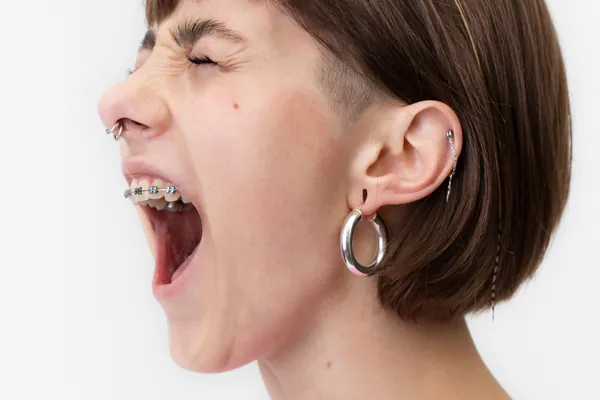
The most common facial piercing, the nostril piercing, is also one of the top piercing types for women. It’s not uncommon to see teachers, nurses, and corporate professionals donning a small nostril stud or sleek nostril hoop.
Because it’s a facial piercing that carries mainstream acceptance, nostril piercings are popular for women of all ages.
Earlobe piercings
Widely considered a “gateway piercing,” earlobe piercings are often teenagers’ first foray into the piercing world. You’ll likely see people of all ages seeking earlobe piercings, so you must be able to communicate the piercing process and aftercare to kids and adults alike.
Navel piercings
Belly button piercings aren’t just common among women but among teenagers as well. Navel piercings carry a high risk of rejection, so have a conversation with your teenage clients before you complete the piercing to make sure that they are mature enough to care for their piercing properly. If they can’t follow aftercare rules, you should consider guiding them toward a piercing that’s easier to heal.
Cartilage piercings
The third most common piercings for teenagers are cartilage piercings. Now that the cultivated cartilage look dominates red carpets and fashion runways, teenagers are flocking to emulate the looks of their favourite celebrities. As much as we love the look, cartilage piercings are notoriously difficult to care for and take a long time to heal.
When a teenager comes to your studio for a cartilage piercing, discuss proper aftercare practices with them and encourage them to come back. That way you can confirm that healing of the piercing is complete before they stop aftercare practices. Many of the complications associated with cartilage piercings occur because the piercee believes their piercing to be fully healed, and then they accidentally damage the still-healing piercing after stopping aftercare practices.
As a piercing professional, you need to be prepared to conduct all sorts of piercing types. However, there are a few stand-out piercings that you’ll do more than others. As long as you’re all stocked up for cartilage, earlobe, nostril, and belly button piercings, you should be all set.
Publication date and/or Last Updated: March 23, 2024
Author: cesar@suprank.com
Views: 558
Copyright Holder: Acha Co., Ltd.
Company info: WholesaleBodyJewellery is owned and operated by Acha, a leading manufacturer and online supplier of piercing jewellery with more than 20 years in the industry.


