
Everything To Know About The Different Types Of Nose Piercings
Everything To Know About The Different Types Of Nose Piercings
The parts of the face that are most commonly pierced are the nose and ears, with the latter being the most popular by far. Just like the ears, the nose can be pierced in many different ways. Most requested however, are nostril and high nostril piercings as well as septum piercings. Apart from these, there are six other types of piercings that go through the skin or cartilage of the nose. These are the nose bridge piercing, nasallang, third eye, Austin bar, rhino, and septril piercing. There is specially designed jewellery for nostril and high nostril piercings in the form of nose studs such as L-shaped nose studs, Bend-It-Yourself nose pins, and nose bones.
Jewellery for other nose piercing types ranges from straight barbells, curved barbells, circular or horseshoe barbells to captive bead rings (BCRs), seamless and segment rings, septum clickers, and even nose labrets. Of these nine nose piercing types, septum piercings are usually the most painful. This also includes the nasallang, a so-called ‘tri nasal piercing’ that goes through both nostrils as well as the septum.
Let’s take a detailed look at the different types of nose piercings.
Below is an overview of the nine types organised into tables. Each table contains information on the gauge of the needle used for the piercing, the best kinds of jewellery for a new piercing of the specific type, the placement, the pain level and the estimated healing time.

Nostril Piercings
Placement: On the right or left side of the groove of the nostril curve
Needle Gauges: 18g (5/128”) or 20g (1/32”)
Jewellery Types: Nose bones, L-shaped nose screws, Bend-It-Yourself nose pins, labret studs, curved or circular barbells, seamless or segment rings, nose rings, and ball captive rings
Pain Level: Low
Healing Time: 16 to 24 weeks

High Nostril Piercings
Placement: Higher up on the right or left side of the groove of the nostril curve
Needle Gauges: 18g (5/128”) or 20g (1/32”)
Jewellery Types: Nose bones, L-shaped nose screws, and Bend-It-Yourself nose pins,
Pain Level: Low
Healing Time: 16 to 24 weeks

Septum Piercings
Placement: Through the thin bit of skin near the tip of the nose called the columella or sweet spot
Needle Gauges: 18g (5/128”) or 20g (1/32”)
Jewellery Types: Circular barbells, ball captive rings, hoops, seamless and segment rings,
Pain Level: Low
Healing Time: 32 weeks
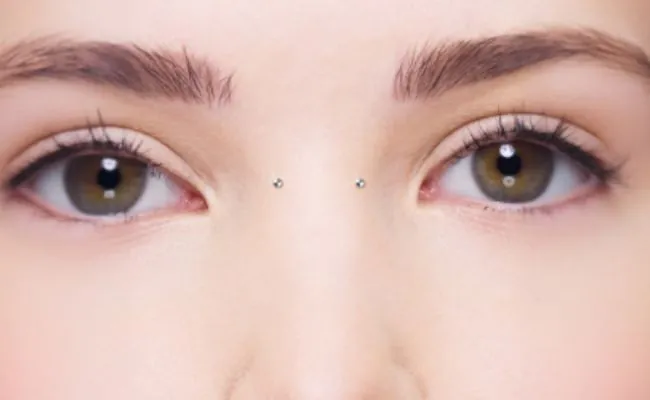
Bridge Piercings
Placement: Horizontally through the skin on top of the nose bridge, right between the eyes
Needle Gauges: 18g (5/128”) or 20g (1/32”)
Jewellery Types: Straight barbells can be used but curved barbells, circular barbells, and ball captive rings are the recommended choice
Pain Level: Low
Healing Time: 8 to 12 weeks

Third Eye Piercings
Placement: Higher up the nasal bridge, between the eyebrows
Needle Gauges: 18g (5/128”) or 20g (1/32”)
Jewellery Types: Straight barbells can be used but curved barbells, circular barbells, and ball captive rings are the recommended choice
Pain Level: Low
Healing Time: 8 to 12 weeks

Nasallang Piercings
Placement: Through both nostrils and the inner septum
Needle Gauges: 16g (3/64”)
Jewellery Types: Straight barbells
Pain Level: High
Healing Time: 12 to 36 weeks

Austin Bar Piercings
Placement: Horizontally through the tip of the nose, not through the septum
Needle Gauges: 18g (5/128”) or 20g (1/32”)
Jewellery Types: Straight barbells (preferably made of BioFlex)
Pain Level: Mid
Healing Time: 8 to 12 weeks

Rhino Piercings
Placement: Vertically through the tip of the nose
Needle Gauges: 18g (5/128”) or 20g (1/32”)
Jewellery Types: Curved barbells
Pain Level: Mid
Healing Time: 12 to 36 weeks

Septril Piercings
Placement: Through the healed fistula of a stretched septum piercing, exits from the nose tip
Needle Gauges: 18g (5/128”) or 20g (1/32”)
Jewellery Types: Curved barbells, nose bones, labret studs
Pain Level: Mid
Healing Time: Varies depending on Septum Piercing
Nostril Piercing jewellery Options
Because of the different types of nose piercings, the choice of jewellery is very varied. Nose bones, L-shaped nose studs and Bend-It-Yourself nose pins are specifically designed for use in the nostrils. Other jewellery that is specific to nose piercings are nose rings or nose hoops, and septum clickers. Labret jewellery, although commonly used in lip piercings can also be used as nostril piercing jewellery. Segment and continuous seamless rings can be used for other piercings, and are not restricted to the nose. Barbells, as well as captive bead rings, are used in many other body piercings such as nipple, ear, and genital and eyebrow piercings.
Nose piercing jewellery such as nose studs and nose rings are mainly used for nostril piercings. For the standard nostril piercing, either Bend-It-Yourself or L-shaped nose studs are used as initial jewellery. Once the piercing has healed, a nose bone, labret or a segment or seamless nose ring can be used. For high nostril piercings nose rings are not suitable as the piercing is higher up and can’t accommodate nose rings which are designed for standard nostril piercings. Due to their smallish sizes they will be too snug around the nostril in a high nostril piercing.
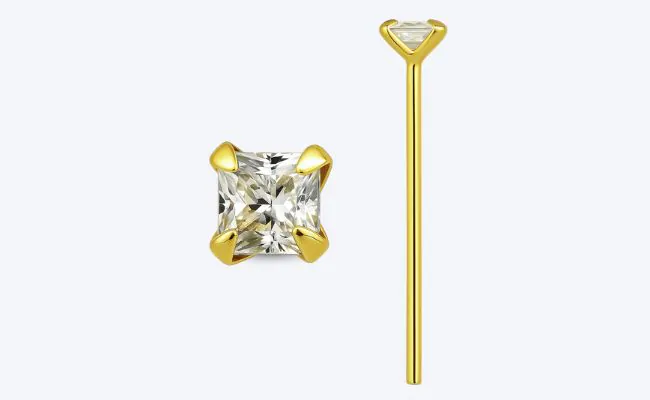
Bend-It-Yourself Nose Studs
Bend-It-Yourself nose stud posts are bent to keep them secure and are produced with a variety of attachments. These include prong-set Cubic Zirconia (CZ) stones, genuine natural stones, and crystals in 16 different colours as well as solid shapes such as balls, hearts, stars, flowers, infinity symbols, butterflies, and balls with dangling ornaments.
Lengths: 7/16” and 43/64”
Gauge Sizes: 16g (3/64”), 18g (5/128”),20g (1/32”), and 22g (1/32”)
Attachment Sizes: 3/64”, 1/16”, 5/64”, 3/32”, ⅛”, 9/64”, and 11/64”
Materials: 316L surgical steel, anodized steel, 925 silver, black plated silver, rose gold plated silver, 18K gold plated silver, 9K gold, 10K gold, 14K gold, rose gold, and white gold
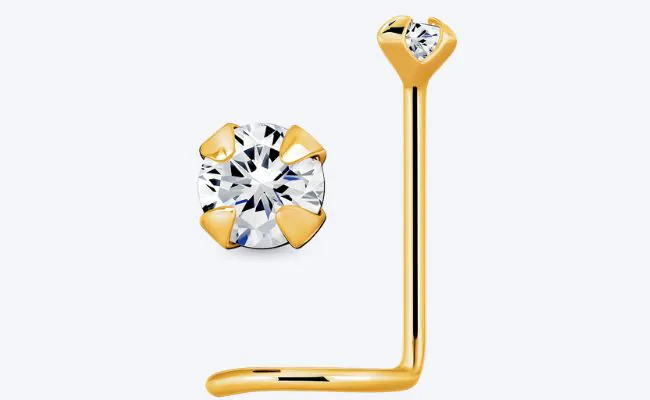
L-shaped Nose Studs
These nose studs are pre-bent to allow for easy insertion and hold firmly in place. They come with ornamental ends in various shapes and designs such as solid balls, hearts, stars, flowers, infinity logos, balls with dangling ornaments, as well as prong-set crystals, Cubic Zirconia (CZ) stones and genuine natural stones in different colours.
Length: 15/64”
Gauge Sizes: 18g (5/128”), 20g (1/32”), and 22g (1/32”)
Attachment Sizes: 3/64”, 1/16”, 5/64”, 3/32”, ⅛”, 9/64”, and 11/64”)
Materials: 316 surgical steel, anodized steel, G23 titanium, anodized titanium, 925 silver, rose gold plated silver, 18K gold plated silver, 9K gold, 10K gold 14K gold, rose gold, white gold, and PTFE
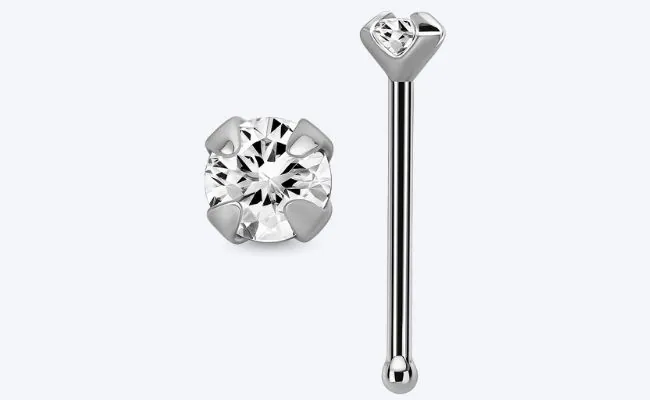
Nose Bones
Nose bones are recommended for healed nostril piercings. They have a small bulb on the end of the post to keep the jewellery secure. The attachment ends come as solid balls or with prong-set semi-precious and precious stones, bezel-set crystals in shapes of stars, hearts, dolphins, skulls, pineapples, hands, feet, flowers, butterflies, and even balls with slave hoops.
Length: 15/64”
Gauge Sizes: 16g (3/64”), 18g (5/128”), 20g (1/32”), and 22g (1/32”)
Attachment Sizes: 3/64”, 1/16”, 5/64”,3/32”, ⅛”, and 11/64”
Materials: 316L surgical steel, anodized steel, PVD plated steel, 925 silver, rose gold plated silver, 18 karat gold plated silver, 9K gold, 10K gold, 14K gold, rose gold, white gold, PTFE, and acrylic
Nose Rings
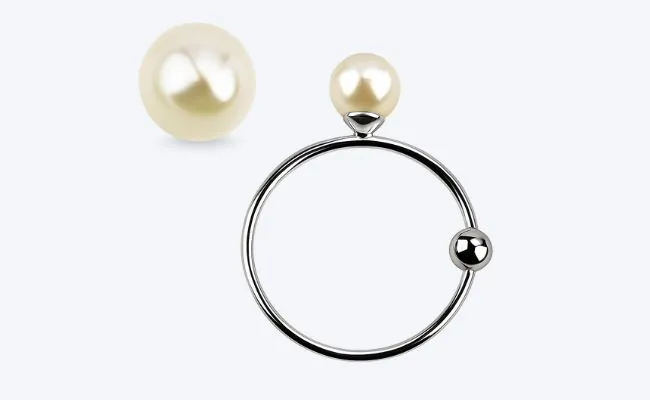
Captive rings, also called ball closure rings, have a solid indented ball or bead that is used to open and secure them. The ball is also produced in a number variations such as with bezel-set crystals, synthetic opals, and even dangling ornaments. Uniquely shaped nose rings in heart and pear shapes are also supplied.
Lengths: 15/64”, 9/32”, 5/16”, 23/64”, 25/64”, 7/16”, 15/32”, 33/64”, 35/64”, 19/32” , ⅝”, ¾”, 53/64”, 63/64”, and 1” 7/64
Gauge Sizes: 14g (1/16”), 16g (3/64”), and 18g (5/128”)
Attachment Sizes: 3/32”, ⅛”, 5/32”, 13/64”, and 15/64”
Materials: 316L surgical steel, anodized steel, PVD plated steel, G23 titanium, and anodized titanium
Labrets
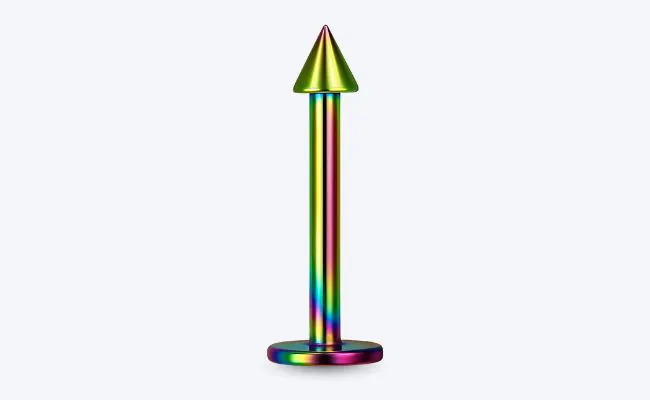
Labrets have a flat back plate that sits flush against the skin and are supplied either with screw-on attachments or push-in tops. Although commonly used for lip piercings, they are also used in nostril piercings and the BioFlex varieties are supplied with gold tops.
Lengths: 15/64”, 5/16”, 25/64”, 7/16”, ½”, 9/16” and ⅝”
Gauge Sizes: 14g (1/16”), 16g (3/64”), and 18g (5/128”)
Attachment Sizes: 3/32”, ⅛”, 5/32”, 13/64”, and 15/64”
Materials: 316L surgical steel, anodized steel, PVD plated steel, G23 titanium, anodized titanium, and BioFlex
Jewellery that is Used for Other Types of Nose Piercings
Barbells, either straight or circular, as well as seamless and segment rings, spirals and twisters, and septum clickers are used for other nose piercings. These include septum piercings, nasallang, bridge, Austin Bar, Rhino, and third eye piercings.
Seamless and Segment Rings
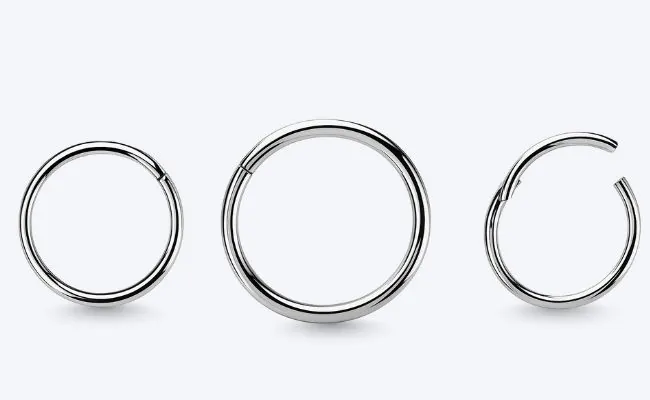
These rings have a small opening that is twisted to insert them and are supplied with or without prong-set semi-precious and precious stone attachments. Segment rings have a separate section that clicks into the opening of the ring and clickers have a hinged segment that secures the ring.
Lengths: 15/64”, 5/16”, 25/64”, 15/32”, 35/64”, ⅝”, ¾”, 63/64”, 1” ⅜ and 1” 31/32
Gauge Sizes: 14g (1/16”), 16g (3/64”), 18g (5/128”), 20g (1/32”), and 22g (1/32”)
Materials: 316L surgical steel, anodized steel, PVD plated steel, 925 silver, rose gold plated silver, 18K gold plated silver, and 14K gold, rose gold, white gold
Spirals and Twisters
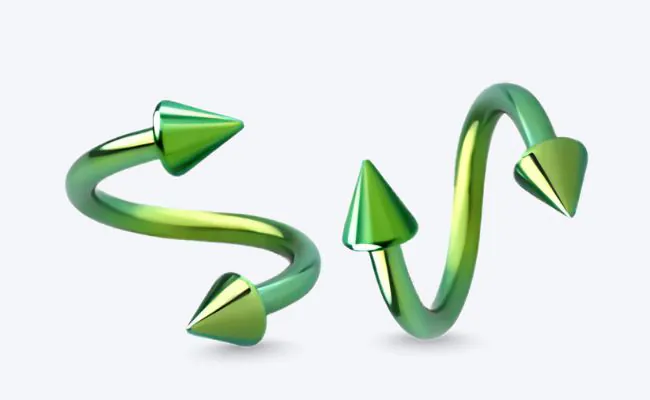
Similar to barbells but longer and bent into a twirl or spiral, this jewellery can be used for nostril as well as septum piercings. The end attachments for spirals and twisters are typically solid balls.
Lengths: 15/64”, 5/16”, 25/64”, 7/16”, and ½”
Gauge Sizes: 14g (1/16”), 16g (3/64”), 18g (5/128”), and 20g (1/32”)
Attachment Sizes: 5/64”, 3/32”, ⅛”, 5/32” and 13/64”
Materials: 316 surgical steel, anodized steel, PVD plated steel, G23 titanium & anodized titanium
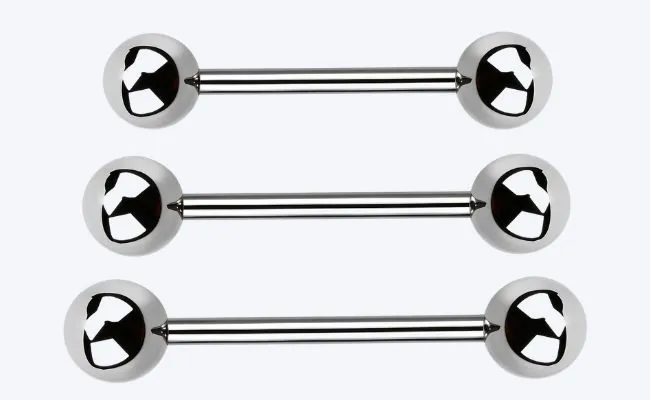
Barbells
Barbells are typically used for nose bridge and nasallang piercings and have two internally threaded attachments. These come in the form of cones, dice, arrow tails, and even as balls with dangling ornaments.
Lengths: 13/64”, 15/64”, 9/32”, 5/16”, 23/64”, 25/64”, 7/16”, ½”, 33/64”, 9/16” and ⅝”
Gauge Sizes: 14g (1/16”), 16g (3/64”), 18g (5/128”), and 20g (1/32”)
Attachment Sizes: 5/64”, 3/32”, ⅛”, 5/32” and 13/64”
Materials: 316 surgical steel, anodized steel, G23 titanium, and anodized titanium
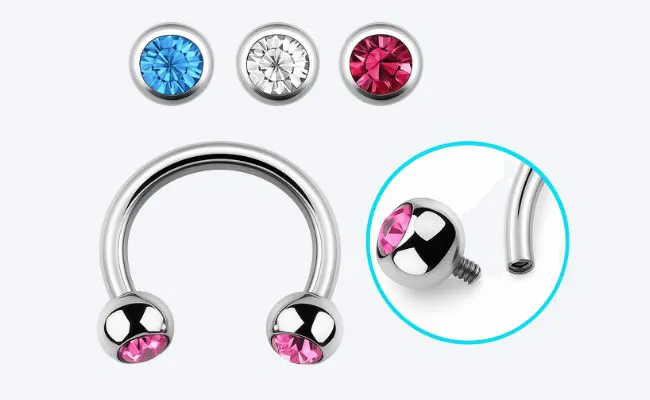
Circular Barbells
Also known as horseshoes, these circular barbells for septums have two internally threaded end attachments in different designs such as solid balls, wooden balls, dice, cones, acrylic, or frosted steel balls.
Lengths: 15/64”, 5/16”, 25/64”, ½”, 9/16”, and ⅝”
Gauge Sizes: 14g (1/16”), 16g (3/64”), and 18g (5/128”)
Attachment Sizes: 3/32”, ⅛”, 5/32”, 13/64”, and 15/64”
Materials: 316 surgical steel, anodized steel, G23 titanium, and anodized titanium
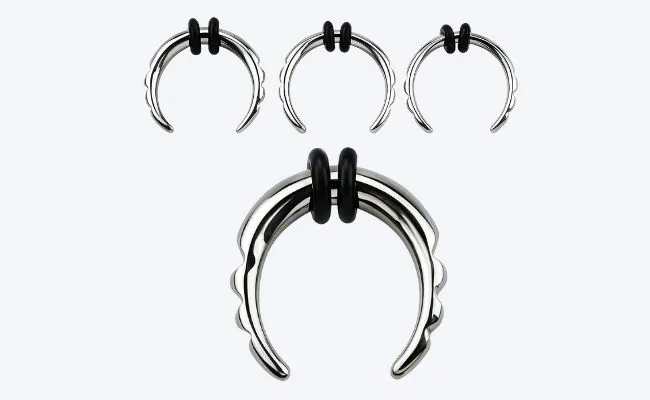
Other Septum Piercing jewellery
Septum jewellery such as pinchers and inverted U shaped retainers is also supplied. Septum pinchers have double O-rings to keep them secure. Retainers are ideal for keeping the piercing open while being almost invisible. This makes them a popular alternative to ring jewellery.
Lengths: 5/16”, 25/64”, and ½”
Gauge Sizes: 12g (5/64”) and 14g (1/16”)
Attachment Sizes: 3/32”, ⅛”, 5/32”, 13/64”, and 15/64”
Materials: 316 surgical steel, PVD coated steel, G23 titanium, and anodized titanium
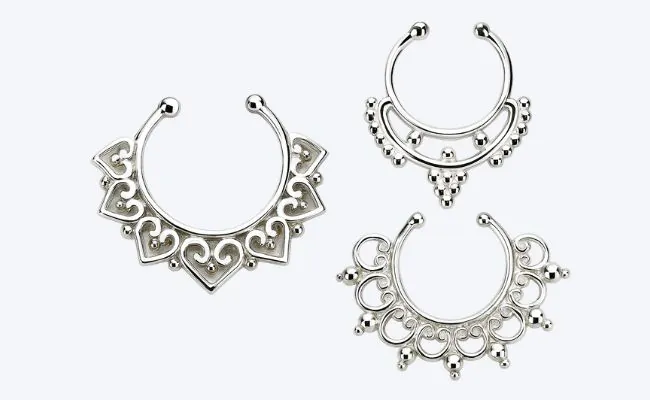
Non-Piercing Fake Nose jewellery
Faux or fake nose jewellery provides the same look as an actual piercing but is kept in place through clips or magnets. It is placed on the surface of the skin giving the appearance of a real nose piercing.
Materials: surgical steel 316L, and anodized steel, and PVD plated surgical steel.
Aftercare Tips for Nose Piercings
It is important for any professional piercer to advise the piercee about staying healthy and looking after the nose piercing while it is healing. This is to reduce the chance of infections and other complications and to ensure the nose piercing stays healthy. The healing times for each nose piercing type are different and following proper aftercare practices during the prescribed period is important. In general, cleaning the piercing area with a saline or sea salt solution several times a day is a good practice. The area should then be patted dry with a clean, disposable paper tissue. It is best to avoid alcohol, scented or harsh soaps, hydrogen peroxide, as well as rotating or twisting the jewellery.
Recommended Materials for Nose Piercings
The Association of Professional Piercers (APP) only recommends three materials that should be used in new nose piercings. 316L surgical steel, G23 titanium, and gold that is 14K or higher are all safe for initial piercings. However, many piercers are only willing to use EO gas sterilised surgical steel and titanium jewellery for the initial piercing. All three recommended materials are hypoallergenic and safe for the body. Sterling silver jewellery should only be used once the piercing has fully healed.
How Much Does a Nose Piercing Hurt?
Nose piercings can be a little uncomfortable due to the many sensory nerves in the nose. They usually heal relatively fast however. Nose piercings are quickly done and their pain levels are between 4/10 to 6/10 on the piercing pain index. Some areas of the nose, such as the septum or the nasallang tend to hurt more when pierced while areas that are easy to reach cause less discomfort and pain. Most people shed a few tears while getting a nose piercing but the aesthetic benefits outweigh the pain.
Why Pierce the Nose?
Nose piercings are among the bolder body piercing types. They are fashionable and can be both simple and decorative. They are also easy to hide when necessary by simply removing the jewellery, which is why they are a popular choice among piercing lovers. If you want to improve your piercing shop’s nose jewellery selection, it is important to familiarise yourself with the different types of nose body jewellery to see which ones could be the most appealing to your clients.
Publication date and/or Last Updated: May 27, 2024
Author: cesar@suprank.com
Views: 673
Copyright Holder: Acha Co., Ltd.
Company info: WholesaleBodyJewellery is owned and operated by Acha, a leading manufacturer and online supplier of piercing jewellery with more than 20 years in the industry.


