Internally Threaded Body Jewellery
Table of Contents
- The Advantages of buying Internally Threaded Body Jewellery wholesale
- Internally Threaded Labrets
- Internally Threaded Surface Bars
- Internally Threaded Belly Bars
- Which Is Better: Internally Threaded Body Jewellery or Externally Threaded Body Jewellery?
- Buying Internally Threaded Body Jewellery
- Changing to Externally Threaded Body Jewellery
- Piercing Aftercare For Internally Threaded Piercings
- How can we help you?
- Common Questions About
- Internally Threaded Body Jewellery
The Advantages of buying Internally Threaded Body Jewellery wholesale
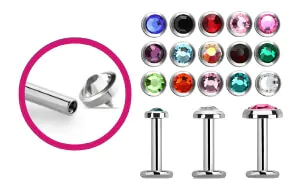
Labrets are ideal internally threaded piercings for lips as their flat backplate sits comfortably without aggravating the teeth and gums. They often come in the form of titanium piercing jewellery and are mostly used for Medusa, Monroe and Madonna piercings as well as tragus and helix piercings. The common size is 16g (1.2mm) and they are manufactured with plain balls or with Ferido-glued crystal tops in different sizes and colours. The internally threaded body jewellery comes in different lengths from 6mm to 12mm to match the wearer’s needs.
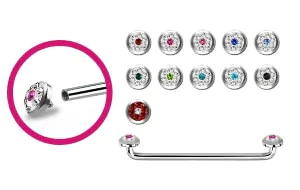
As surface bars are placed under the skin and are more complicated than standard piercings, internally threaded jewellery are highly beneficial for the safety of the wearer. This type of wholesale surface barbell ensures smooth insertion and less risks to damage the fistula . Surface bars are manufactured in a variety of lengths of 19mm to 32mm and come in 14g (1.6mm). The screw-on attachments come in basic shapes such as balls and cones but also with Ferido-glued crystals in up to 12 different colours. For a different look, there are wholesale surface bars with PVD-plated attachments in black, blue, gold, and rainbow colours.
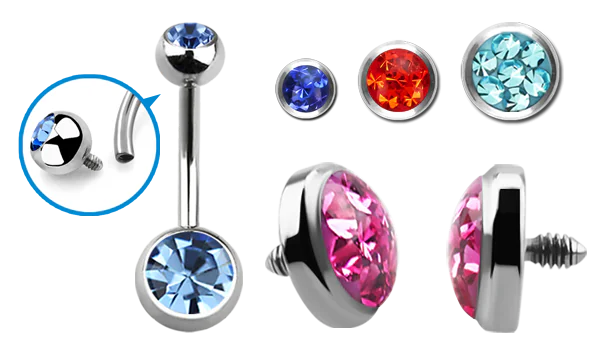
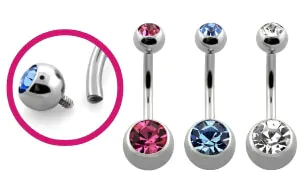
Internally threaded piercings for the navel are sold in lengths of 8 to 14mm and come with basic or bezel-set jewel balls in clear, rose, and light sapphire colours. The upper balls are 5mm and the lower balls are 8mm. The gauge is 14g (1.6mm) and they are extra polished to ensure smoothness and shine.
Materials
316L surgical steel, titanium G23
Materials
316L surgical steel, titanium G23
Materials
316L surgical steel
Which Is Better: Internally Threaded Body Jewellery or Externally Threaded Body Jewellery?
Barbells, labrets, belly bars, and wholesale dermal anchors are often screw-type body jewellery. The two variations of threading are internally threaded body jewellery and externally threaded body jewellery. Of the two types, external threading is most commonly found in standard body jewellery collections.
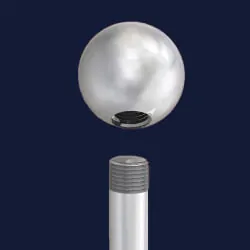
Externally Threaded Body Jewellery
With externally threaded jewellery, the post is screwed into the attachment. It is slightly easier for bacteria and other microorganisms to adhere to the curves of those threads. Therefore, externally threaded body jewellery is best suited for completely healed piercings and not for new piercings.
It must be noted that externally threaded body jewellery from our collection is extremely thoroughly polished and checked by 2 different employees to ensure the threats are perfectly smooth and do not contain sharp edges.
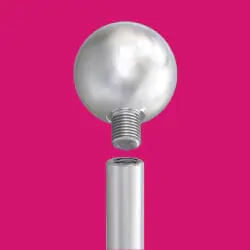
Internally Threaded Body Jewellery
The attachments of this collection are screwed into the post, which ensures the jewellery passes through the fistula smoothly without irritation. Internally threaded piercings, such as internally threaded barbells, are produced with implant grade materials that carry material certifications, such as 316L surgical steel. The collection is suitable for new as well as healed piercings.
Because of the ease of insertion and removal, the demand for internally threaded body jewellery is rising. Apart from safety and ease, the collection is also available in a large variety of sizes and styles. We supply internally threaded barbells, eyebrow bars, belly bars, surface bars, and labrets.
Buying Internally Threaded Body Jewellery

The manufacturing process of internally threaded body jewellery is more complicated, therefore, the price of these items can be slightly higher. Reputable body jewellery suppliers as Acha will supply jewellery with internal threads to meet the needs of all customers.
Professional piercers can buy internally threaded jewellery like belly bars, labrets, barbells, circular barbells, dermal anchors, and surface bars and can benefit from the largest variety of sizes to meet the needs of every customer.
Our wholesale body jewellery collection consists of basic and decorative items, including internal threaded items with bezel-set crystals, PVD-platings, resin-covered crystals, and logoed items.
Changing to Externally Threaded Body Jewellery
Once the fistula has fully healed, the choice of using either internally or externally threaded jewellery is up to the wearer. Professional piercers can benefit from this moment as many wearers decide to change to a more decorative style, and thus buy body jewellery. When customers decide to change the body jewellery by themselves, it is important to inform them to wash hands and clean the piercing carefully before doing so. The attachment can be held with one hand and the other hand can be used to turn the post to unscrew it.
Piercing Aftercare For Internally Threaded Piercings
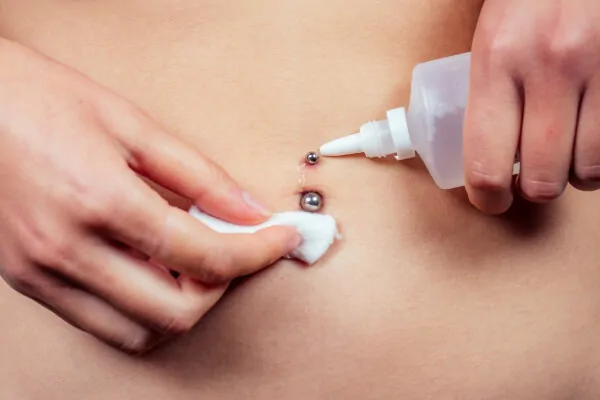
Although internally threaded jewellery can be inserted more easily and with less risks, proper aftercare must still be taken into account to prevent complications.
Proper aftercare involves:
- Using a sterile saline wash to keep the piercing clean during the healing period. Avoid alcohol, peroxide, creams, ointments, and oils.
- Only using disposable paper tissues to dry the piercing as fabric cloths can be a breeding ground for bacteria. Also, the fibres of fabric are likely to snag on the internally threaded jewellery.
- Read more about piercing aftercare.
How can we help you?
It’s not easy to choose the best supplier of wholesale body jewellery and body piercing supplies because there are many to choose from. We have been in the industry for over 20 years and have thousands of satisfied customers worldwide. We are confident that we are the best choice for piercing professionals due to our vast experience, the quality of our products and our committed team of industry experts. Below is a compiled list of our Piercings FAQ – frequently asked questions about body piercing jewellery that explain our business ethics and how we operate. If there are any questions in our Piercings FAQ that do not cover what is needed, please do not hesitate to contact us and we will be happy to provide you with assistance.
Common Questions About
Internally Threaded Body Jewellery
- What is internally threaded jewellery?
- Is internally threaded jewellery better?
- What’s the difference between threadless and internally threaded jewellery?
- How do you know if jewellery is internally threaded?
- How do you open internally threaded jewellery?
- How to remove internally threaded jewellery


