Wholesale Piercing Barbells
Table of Contents
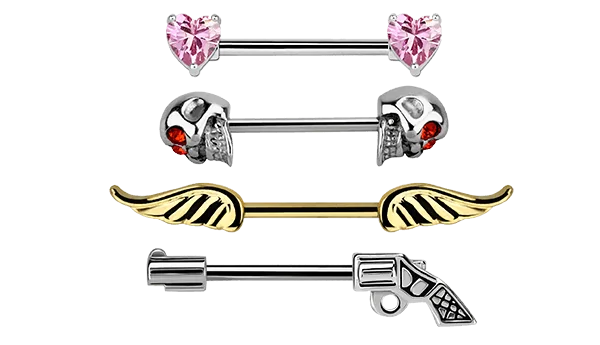
- Wholesale Barbell Jewellery for Professional Piercing Studios in the UK
- Best-Selling Barbell Jewellery
- Titanium Barbells with Ferido-Glued Crystals
- Curved Bars with Bezel-Set Crystals
- Internally Threaded Bars
- Size Guide For Barbell Jewellery
- Types of Barbells
- What Materials Should Be Used for Initial Piercings?
- How can we help you?
- Common Questions About Barbell Jewellery
Wholesale Barbell Jewellery for Professional Piercing Studios in the UK
We supply a selection of loose wholesale barbell jewellery for wearers who want to replace the end parts. These loose parts should be included in the stock of any reputable piercer as it brings opportunities for cross-selling. Loose body jewellery parts are available in different materials, sizes, and gauges.
Best-Selling Barbell Jewellery
Our online body jewellery store carries a large variety of barbell piercing jewellery, which is made of the highest grade materials. There are sterilised versions available and all are sold per piece, in bulk, on displays, individually packaged, or in piercing kits with the matching needle.


Size Guide For Barbell Jewellery
Barbell piercing jewellery is manufactured from a great variety of quality materials. These include 316L surgical steel, anodised steel, ASTM F-136 titanium (Ti6Al4V ELI), anodised titanium, G5 titanium, acrylic, and BioFlex PTFE. There are also more precious gold barbells although they are not very common.
For initial piercings, it is recommended to only use hypoallergenic body jewellery such as G23 titanium and stainless steel barbells. These materials are versatile and used for many piercing types. Surgical steel and titanium body jewellery are among the best selling product types when it comes to piercings. Although many bars are short and start at 6mm, there is also long post barbell piercing jewellery used for industrial piercings and surface barbells that are placed under the skin.
Curved barbells used as eyebrow barbells or tragus barbells have a thickness of 18g (1mm) to 16g (1.2mm). Standard sized bars are 14g (1.6 mm) and are used for tongue and nipple piercings as well as industrial piercings. Big gauges as thick as 00g (10mm) are normally only used for tongue barbells and genital piercings. For initial piercings the below sizes are recommended:
For initial piercings, it is recommended to only use hypoallergenic body jewellery such as G23 titanium and stainless steel barbells.
| Piercing Type | Barbell Jewellery Type | Gauge | Length |
|---|---|---|---|
| Bridge | Straight or Curved | 14g (1.6mm), 12g (2.0mm) | 13mm to 15mm (depending on size of the nose) |
| Eyebrow | Curved | 16g (1.2mm), 14g (1.6mm) | 6mm to 14mm |
| Frenum | Straight or Curved | 14g (1.6mm), 12g (2.0mm), 10g (2.5mm) | 15mm |
| Helix | Curved | 16g (1.2mm) | 6mm or 10mm |
| Industrial | Straight | 14g (1.6mm) | 28mm to 52mm |
| Navel | Curved | 14g (1.6mm), 12g (2.0mm) | 8mm to 14mm |
| Nipple | Straight | 14g (1.6mm), 12g (2.0mm), 10g (2.5mm) | 10mm to 16mm |
| Prince Albert | Curved or Horseshoe | 12g (2.0mm), 10g (2.5mm), 8g (3mm), 6g (4mm) | 1.6mm to 12mm |
| Rook | Curved | 16g (1.2mm) | 6mm to 10mm |
| Septum | Horseshoe | 16g (1.2mm), 14g (1.6mm), 12g (2.0mm) | varies |
| Surface | Surface | 16g (1.2mm), 14g (1.6mm), 12g (2.0mm) | varies |
| Tongue | Straight | 14g (1.6mm), 12g (2.0mm) | 16mm to 22mm |
| Tragus | Straight | 16g (1.2mm) | 4mm to 12mm |
| Clitoral Hood | Straight or Curved | 14g (1.6mm), 12g (2.0mm), 10g (2.5mm) | 10mm to 12mm (can vary) |
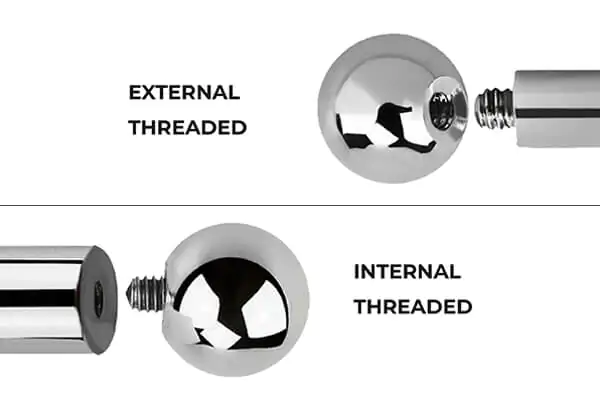
Externally threaded wholesale barbell jewellery is made with step-down threading, meaning the threaded bar is screwed inside the top part. Internally threaded bars made of ASTM F-136 titanium (Ti6Al4V ELI) and surgical steel barbells have smooth ends with receiving threads tapped into the end of the bar. They are preferred to externally threaded versions for several reasons. Internally threaded body jewellery is less likely to cause damage and irritation, especially during the healing period. Internally threaded versions require extra machining and labour.
The Association of Professional Piercers (APP) recommends to use internally threaded barbell posts with new piercings as they are smooth and do not irritate the flesh or cause trauma when inserted, unlike externally threaded ones.
Types of Barbells
Barbell piercing jewellery is the most common type of jewellery used apart from the mainstream nose and ear piercing jewellery. Barbell jewellery is used in nearly all piercings from the nipple, belly, skin surface, tongue and eyebrow to genital piercings.
Our wholesale barbell jewellery comes in a large selection of different variations. The two end attachments are most commonly solid balls but are also sold in a variety of other designs such as cones, dice, screws, arrows as well as jewelled balls with bezel-set crystals, Ferido-glued multi crystals, prong-set cubic zirconia (CZ) stones, wood, acrylic and even synthetic opals.
There are some products such as gold barbells that have one epoxy-glued or welded-fixed attachment and the other can be removed to insert and take out the jewellery. However, the most common types like nipple barbells and tongue barbells are those with two removable attachments.
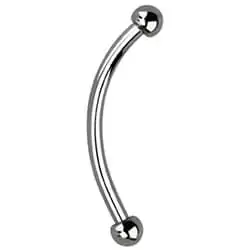
Curved Bars
These are similar to straight bars or straight barbell piercing jewellery but are bent to give curvature. Curved bars are recommended for eyebrow piercings as the jewellery helps prevent migration and rejection. It is also used in navel piercings for the same reasons and follows the curvature of the anatomy.
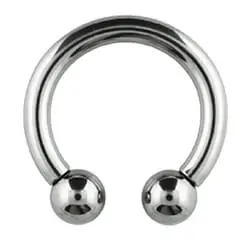
Circular Barbells
Also known as horseshoe barbells, circular barbells are bent to resemble an open-ended circle. Circular barbells are used in many types of piercings such as earlobes, tragus, septum, Prince Albert, and even horizontal clitoral hood piercings.
Surface Bars
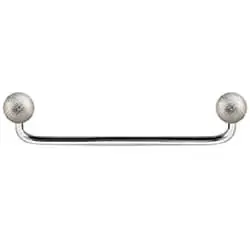
Surface barbells, also called surface bars, have a long post that sits under the skin with 45° or 90° bent ends, in the same direction, for the internally threaded attachments. Surface piercing barbells can be placed anywhere on the body with skin and have the appearance of two studs floating on the surface.
End Attachments
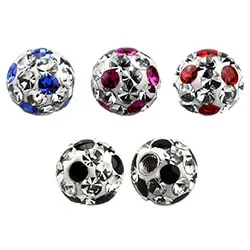
The end attachments for barbell piercing jewellery are usually solid, internally threaded balls. Most often, the same sized attachments are used but it is possible to attach different sized tops if the gauge matches. In cases of belly barbells, the upper ball is smaller than the lower ball. The attachments come in a variety of different shapes such as cones, cubes, dice, and flat disks. The attachment balls are sold in different varieties such as crystal balls, bezel-set jewelled balls, Ferido-glued multi-crystal balls, anodised steel balls, PVD plated balls, titanium balls, frosted steel balls, BioFlex balls, skulls, and other shapes.
What Materials Should Be Used for Initial Piercings?
Wholesale barbell jewellery is made primarily of materials that are hypoallergenic for body piercing purposes to prevent complications in the healing process. The most recommended materials for initial piercings are 316 surgical steel and ASTM F-136 titanium (Ti6Al4V ELI). Gold in 14KT or higher grade is another great option. After the piercing has healed, more material choices become available. Although not as common as for instance titanium barbells, gold barbells are used for eyebrow and tragus piercings. The end attachments can be of the same materials or any other body jewellery and can range from acrylic, wood, and synthetic opal.
How can we help you?
It’s not easy to choose the best supplier of wholesale body jewellery and body piercing supplies because there are many to choose from. We have been in the industry for over 20 years and have thousands of satisfied customers worldwide. We are confident that we are the best choice for piercing professionals due to our vast experience, the quality of our products and our committed team of industry experts. Below is a compiled list of our Piercings FAQ – frequently asked questions about body piercing jewellery that explain our business ethics and how we operate. If there are any questions in our Piercings FAQ that do not cover what is needed, please do not hesitate to contact us and we will be happy to provide you with assistance.
Common Questions About Barbell Jewellery
- What is a barbell in piercings?
- How long does a piercing with a barbell hurt for?
- How to remove barbell jewellery
- How to unscrew barbell jewellery
- How to measure a piercing barbell
- What is the difference between a barbell and a labret?


