
Prince Albert Piercing Essentials: From Procedure to Aftercare
Prince Albert Piercing Essentials: From Procedure to Aftercare
Specialising in genital piercings can be an excellent way to stand out from your competitors. Piercing such a sensitive area requires expertise and trust; customers don’t want to get genital piercings from just any piercer. If you can position yourself as a dependable genital piercing specialist, you may enjoy guaranteed clientele.
Prince Albert piercings are the most popular penis piercing. Whether or not you want to specialise in genital piercings, you’ll likely get some questions about it. You should understand the basics of this piercing choice to help guide your clients toward the right piercing choice.
Here’s our complete guide to Prince Albert piercings.
What is a Prince Albert piercing?
Prince Albert piercings are penis piercings that have an entry point on the underside of the penis at the base of the head and an exit point through the urethra. Although it looks like an intense piercing, it actually goes through a very thin piece of skin, so it’s a lot easier than many people think.

Why is it called a Prince Albert piercing?
Legend states that the Prince Albert piercing origin is from the fact that its namesake, Queen Victoria’s consort, wore one. The reality isn’t as fun: a man named Doug Malloy fabricated the story in a pamphlet about piercings.
Why do people get Prince Albert piercings?
Although it’s widely believed that genital piercings are done solely for sexual reasons, there are many factors behind getting a Prince Albert piercing.
Genital piercings offer a sense of empowerment for many people, especially those who are uncomfortable with their bodies. Some trans or non-gender-conforming people get their genitals pierced as a way to celebrate their bodies. It can also be a way for people to create confidence in themselves.
Of course, there are sexual motivations for this type of piercing. Prince Albert piercings may offer some pleasurable sensations for their wearers, but it’s really designed to provide sexual pleasure to the wearer’s partner when the jewellery comes into contact with sensitive areas.
As a piercer, it’s important to understand that there are a range of reasons for seeking this type of piercing—some purely for pleasure and others for much deeper reasons. Because of this, you should approach any queries from a place of empathy and respect.
Variations
The reverse Price Albert piercing is the same as the Prince Albert piercing, but it appears on top of the penis instead of below. If you combine both the Prince Albert and the reverse Prince Albert, the resulting double piercing is referred to as the apadravya.
Piercing process
Piercing genitals takes an extra element of care and consideration. As a more intimate process, you need to take the time to ensure that your client is completely comfortable every step of the way. Provide ample time to allow your customers to take breaks when needed, and never pressure them; let them get pierced in their own time.
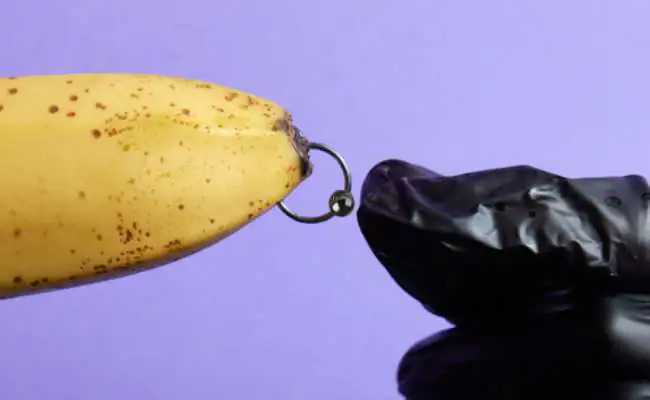
You will first need to ascertain whether your client has the suitable anatomy for Prince Albert piercings. The piercing is ideal for those who are circumcised, but they can be done on intact penises if they have suitable anatomy. Depending on their tissue, you may need to place the entry point to the right or left of centre.
The actual piercing process will be the same as any other piercing type. You’ll clean the area, mark the entry and exit points, and complete the piercing. It’s important to note that it’s common for slight or full erections to occur while prepping the area as a natural response. This can be ideal while marking the piercing location, as the jewellery needs to be able to fit when the penis is erect. However, the penis should not be erect while conducting the piercing, so be sure to give your client time to rest between marking the piercing location and the piercing itself.
Typically, Prince Albert piercings are pierced at 10G – 12G. Ask if your clients plan to stretch their piercings later, as this will affect your placement choices. This is a piercing that can be fairly substantially stretched.
Prince Albert piercings bleed a lot. According to Elayne Angel, one of the top genital piercing specialists in the world, the amount of blood could fill two disposable gloves. Have your clients bring a heavy pad or adult diaper to the appointment, and learn how to wrap the penis so that they can get home without bleeding through their trousers. After a couple of days, the heavy bleeding should stop, but light bleeding may persist for up to a week.
Does it hurt to get a Prince Albert piercing?
Surprisingly, it doesn’t hurt as much as you’d think. Because the tissue that’s pierced is very thin, it lies about midway on the pain scale. However, this can be a mentally draining piercing. Make sure that your clients eat before their piercing appointment, and give them time to lay down and unwind afterward so that they don’t faint.
Healing and aftercare
The Prince Albert Piercing healing time takes at least 4 – 8 weeks. Have your client come to you to confirm that healing is complete before stopping aftercare practices.
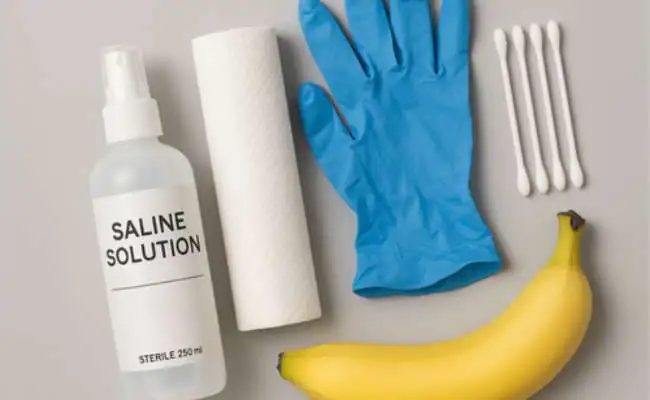
Cleaning Prince Albert piercings is the same as any other piercing. Simply clean the front and back of the piercing with piercing aftercare saline solution 2 – 3 times daily. This can be done in a few different ways.
- Spray saline solution directly on the piercing holes.
- Wipe the piercing’s entry and exit holes with a clean paper towel that’s dampened with saline solution.
- Conduct a saline soak by dipping the piercing into a small glass of saline solution and let it sit for a few minutes. This will fully clear out the Prince Albert piercing fistula.
Aftercare rules
Before your client leaves your studio, provide a list of aftercare rules for them to abide by. Some of these are general aftercare rules and others are Prince Albert piercing specific.
- Do not let the piercing touch the toilet bowl or toilet water as you urinate during healing for obvious reasons.
- During the first few days after getting pierced, erections can be uncomfortable. Do your best to keep the penis still.
- Avoid getting the piercing damp, and stay away from pools, tubs, rivers, and other water.
- Avoid sexual contact during the entire healing period. While your own bodily fluids won’t harm the piercing, other peoples’ will.
- Do not touch or twist the jewellery during healing.
- Do not pick at any crusties that form. Instead, gently dab them away with a paper towel soaked in purified water.
- Avoid wearing tight trousers and underwear as the piercing heals. Opt for boxers or loose-fitting clothing.
- Avoid wearing lacy items or anything that might catch on the jewellery.
- Keep an eye on the jewellery and make sure that it doesn’t press against the piercing holes when the penis is erect. If this is the case, visit your piercer to get fitted with a better-fitting piece.
Risks and considerations
Perhaps surprisingly, the risk factors associated with Prince Albert piercings are quite low. While there are considerations specific to this piercing type, piercees are no more likely to have issues than with any other piercing type. Here are the top things to watch out for.
Urination considerations
Because the exit hole appears in the urethra, it may sting when urinating during the first days of healing. To help alleviate this, piercees can fill a cup or bowl with clean water and submerge their penis to urinate. This will dissipate the urine and make it less painful.
Once the piercing has healed, they may see a change in their urine stream. This can make it difficult to urinate while standing. Depending on their jewellery and the placement of their piercing, piercees may need to adopt different strategies to accurately aim their stream.
Condom breakage
Due to the location of the piercing, the jewellery could cause condoms to break. Piercees should opt for smooth genital jewellery with no sharp edges and remain mindful in case breakage should occur.
Piercing infection
If the Prince Albert piercing stays clean and free from debris, it should avoid an infection. It may seem as though the Prince Albert piercing is more susceptible to infection since it goes through the urethra, but this is not the case. The piercee’s own urine will not harm the piercing, so as long as they keep it away from others’ bodily fluids, they should be fine.
Infections can be serious, so it’s important that your customers know the signs. They could be experiencing an infection if there’s green or yellow discharge coming from the piercing site, it feels hot to the touch, they experience throbbing pain, and/or the piercing is red and inflamed. These symptoms are often severe and appear quickly. If your client suspects a piercing infection, they should visit a medical professional immediately.
Prince Albert piercing jewellery
Prince Albert piercings can wear ring styles (captive rings, hoops, etc.), horseshoes and curved barbells. For optimal comfort, the jewellery should be smooth, and internally threaded Prince Albert jewellery is preferred.
Healing piercings are limited in the jewellery materials they can wear. Most people choose 316L surgical steel and ASTM F-136 titanium for fresh piercings. Both are anti-corrosive, lightweight, and inexpensive. It’s important to note that surgical steel can contain some nickel while titanium is nickel-free. If your client has skin sensitivities, it’s best to stick with titanium.
Even though 14k or 18k gold is safe for fresh piercings, many people wait to invest in high-quality metals until their piercing has fully healed.
More jewellery materials are available to wear once the piercing has healed.
Wholesale Prince Albert jewellery in the UK
If you’re seeking high-quality, unique Prince Albert jewellery that your customers can’t find anywhere else, then look no further; we’ve got you covered.
As a piercing jewellery wholesaler that has serviced piercing studios all over the world for over 20 years, we know what we’re doing. Besides ensuring that our selection stays on top of popular trends, we place jewellery safety as our highest concern. We offer layers of quality control, promising that our Prince Albert jewellery adheres to international and UK standards.
Here, you’ll find a wide range of Prince Albert jewellery options, including internally threaded jewellery and individually packaged, EO gas sterilised options. We also offer display cases, piercing tools, and other accessories to ensure that you can offer the very best to your clients.
We want to be there for our clients, which means that our customer service team is always available to answer any query. Interested in learning more? Contact us today!
Publication date and/or Last Updated: August 30, 2025
Author: cesar@suprank.com
Views: 618
Copyright Holder: Acha Co., Ltd.
Company info: WholesaleBodyJewellery is owned and operated by Acha, a leading manufacturer and online supplier of piercing jewellery with more than 20 years in the industry.


